
What do a freshly baked croissant and a reinforced concrete wall have in common? At first glance, very little. But both are products of resource-intensive systems that have long been optimised for efficiency rather than circularity. After exploring circular food systems at the Emil Fischer Vocational School (first post), we expanded Fit for Circular Economy (FFCE) to another key sector: construction.
With FFCE, we bring circular economy principles directly into Berlin’s vocational schools, where future construction professionals are trained and where material decisions and construction practices are learned from the start.
Why Construction Matters for the Circular Economy
The construction sector is one of the most resource-intensive industries worldwide. It accounts for around 50% of global raw material consumption and a significant share of greenhouse gas emissions. A large part of this impact is generated before a building is even in use, through material production, construction methods, and system choices.
Circular construction therefore starts long before recycling. It is determined by how materials are selected, how components are connected, and how buildings are designed for use, change, and disassembly.
Turning the Classroom into a Construction Reality Check
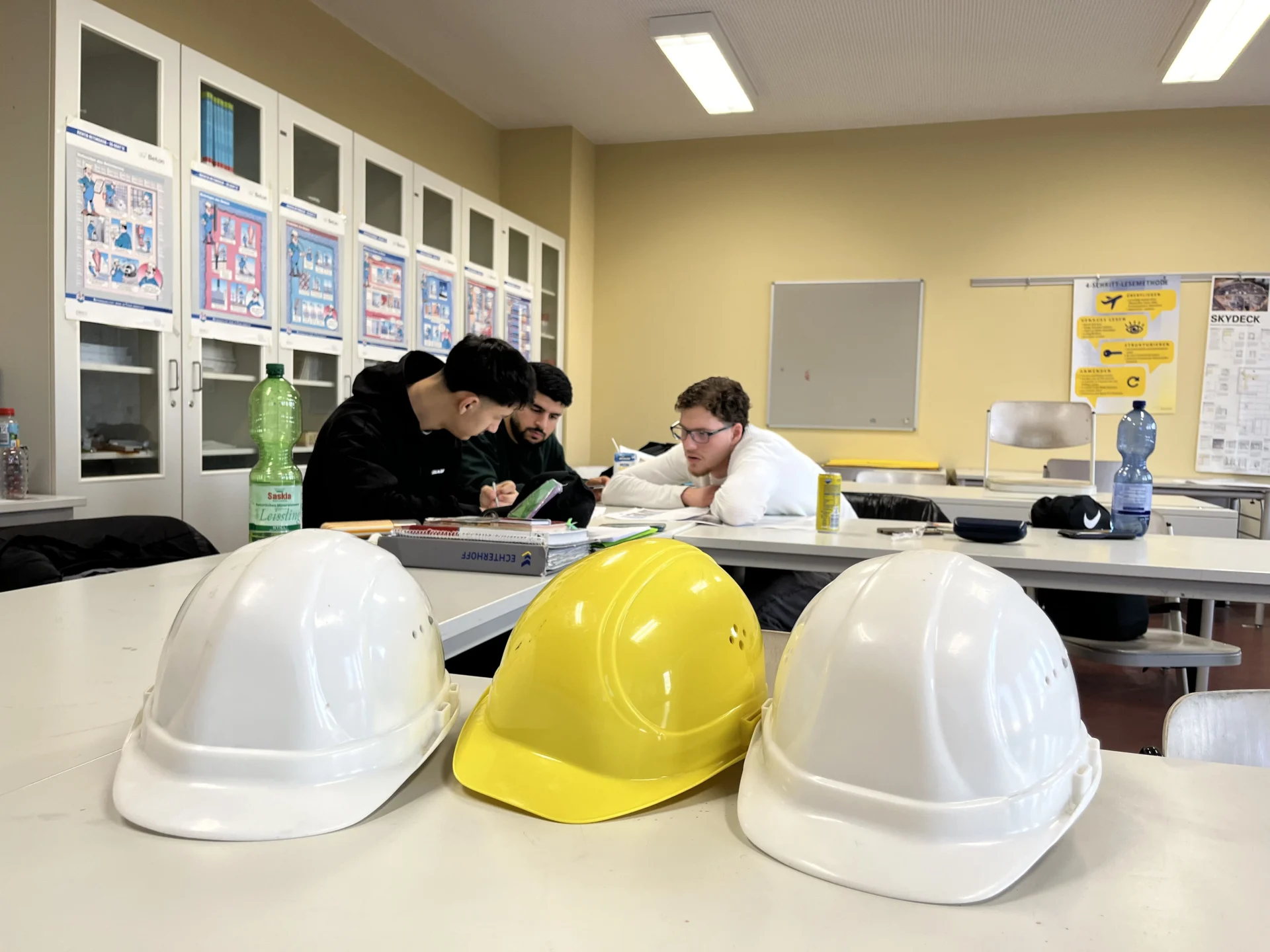
In December 2025, twelve apprentices in reinforced concrete construction at the Max-Bill-Schule in Berlin took part in an eight-block teaching programme on circular construction. The objective was not to raise awareness of sustainability, but to analyse where circular strategies succeed or fail in real construction practice.
The programme followed the life cycle of buildings and typical construction processes, focusing on:
- life cycle thinking instead of isolated measures,
- material strategies instead of simple “good” or “bad” labels,
- concrete construction details and case studies.
Block 1 & 2: Introduction to the Circular Economy and Life Cycle Thinking in Construction
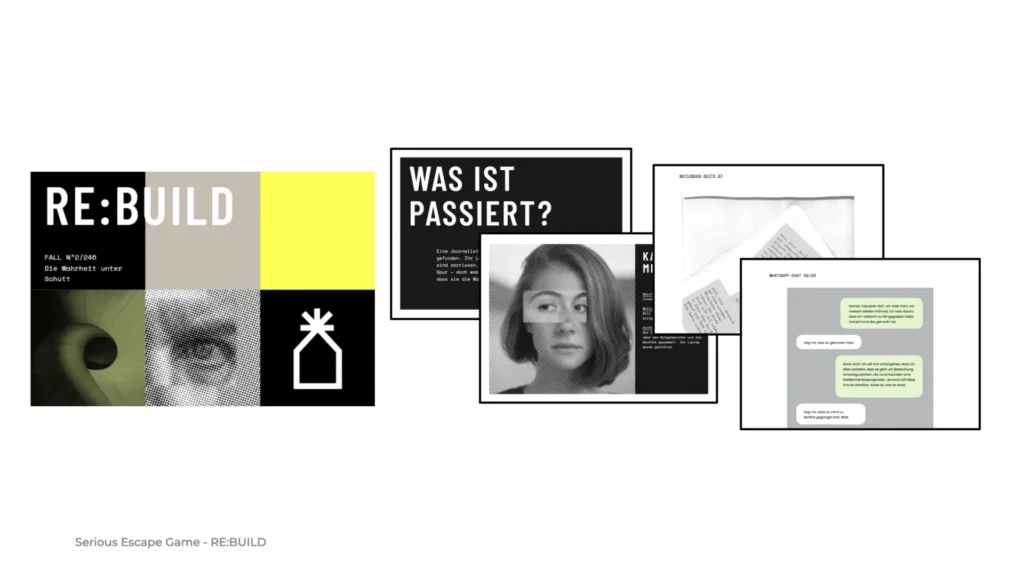
The opening block, co-hosted with Tobias Jänicke (FH Potsdam), established a shared understanding of circular economy principles in the construction context. Life cycle thinking was introduced as a practical tool rather than a theoretical framework. Through the game RE:Build led by Christian Schlimok (Novamondo) , students experienced how decisions made during planning and construction determine environmental impacts across a building’s entire life cycle.
Block 3 & 4: Circular Materials and Construction Practices
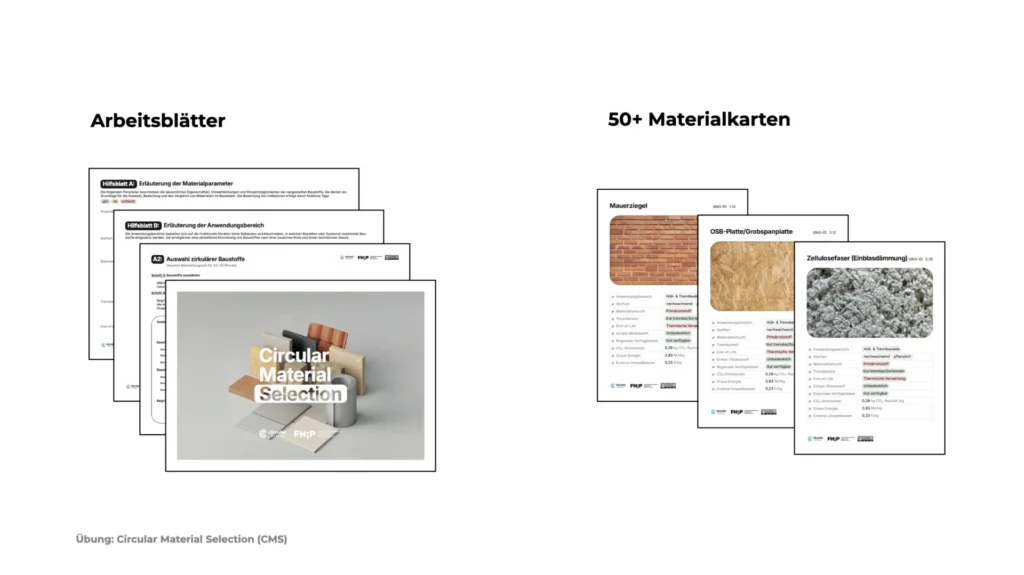
A key learning outcome was that circularity is rarely about a single material. Concrete, steel, timber, insulation materials, and adhesives all have advantages and limitations. The decisive factor is how they are combined. The work was co-designed with Prof. Patrick Teuffel and we received insights from Hoang Anh Nguyen (ecolocked).
Students analysed:
- renewable and biobased materials and their constraints,
- mineral and metallic materials and their ongoing relevance,
- synthetic materials and the challenge of irreversible bonding.
Instead of treating concrete as a climate villain, discussions focused on material efficiency, recycled aggregates, optimisation, and reuse potential. Likewise, biobased materials were assessed critically, including fire protection, moisture behaviour, standardisation, and market availability.
One conclusion shaped the entire block:
circularity is decided on the construction site – at the connection detail.
Whether components can be reused or become waste often depends on:
- mechanical instead of adhesive connections,
- dry instead of wet construction,
- modular and prefabricated systems,
- separable layers and documented assemblies.
For many apprentices, this marked a shift from policy targets to practical construction responsibility.
Block 5: Building Within Existing Structures
Building within existing structures was addressed as one circular strategy among others. Together with Janna Schlender we looked at the example of Impact Hub Berlin. Renovation, adaptation, and reuse were the centre of the discussion, also highlighting real-world constraints.
Students examined challenges such as:
- unknown structures,
- regulatory requirements,
- conflicting technical demands,
- coordination across disciplines.
At the same time, they learned why existing buildings matter: they already contain large amounts of material, energy, and labour, and many circular strategies depend on extending their use and adaptability.
Block 6: Industrial Perspective and Material Production
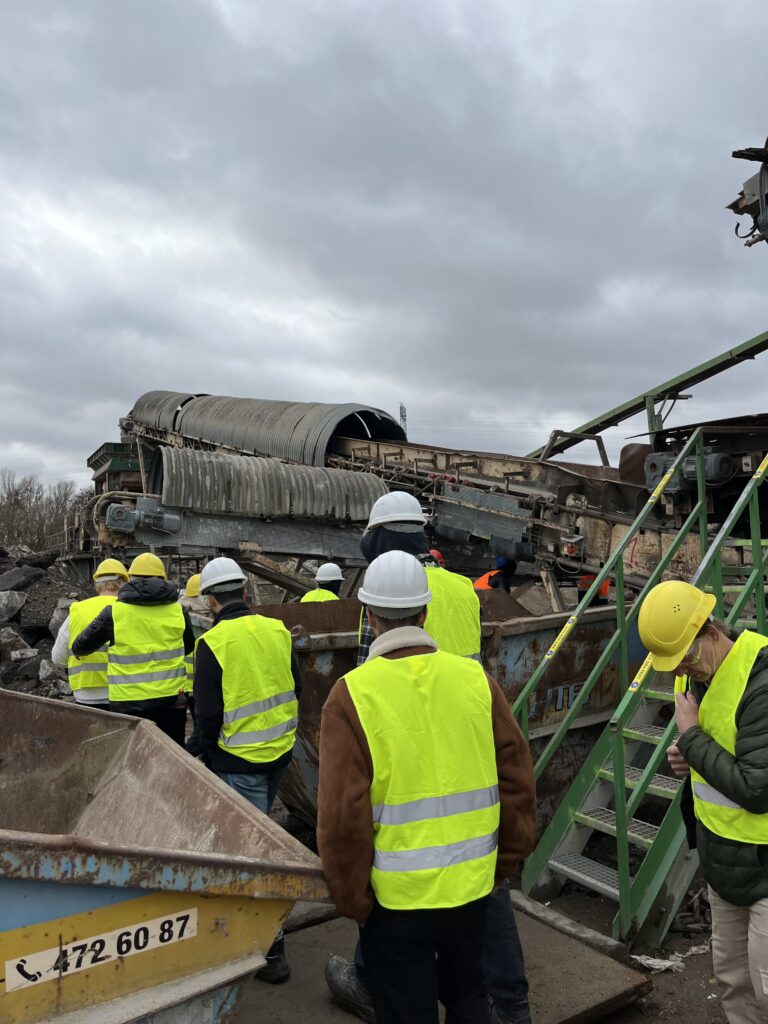
Field trip to CEMEX Deutschland AG, guided by Thomas Zohm
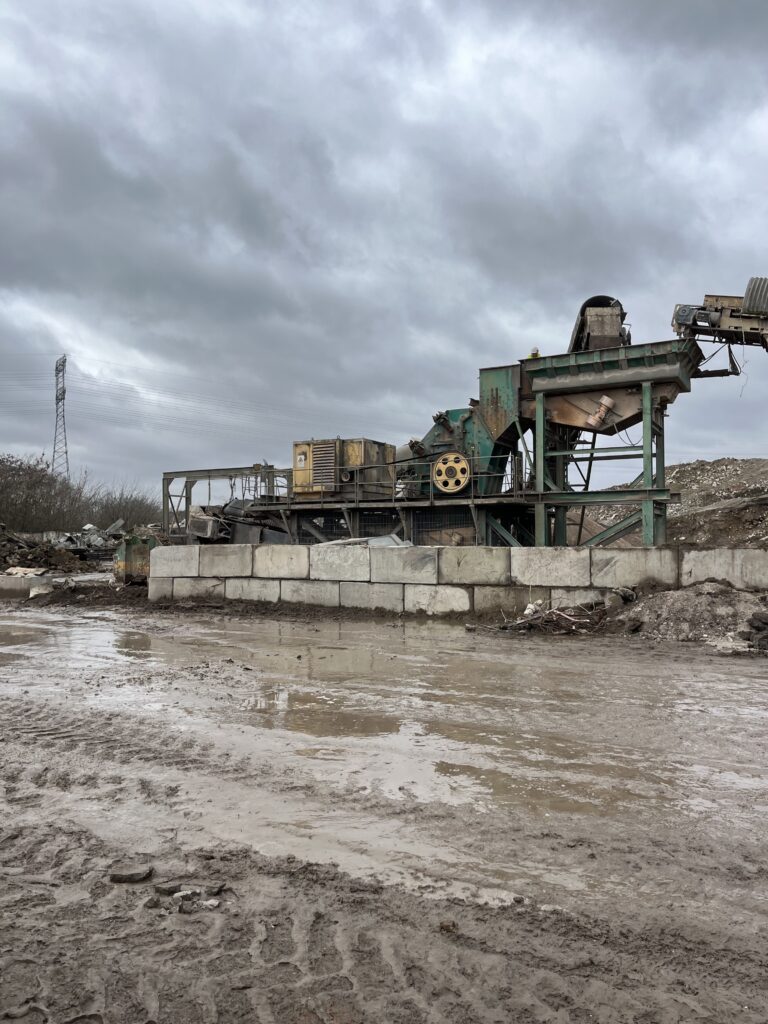
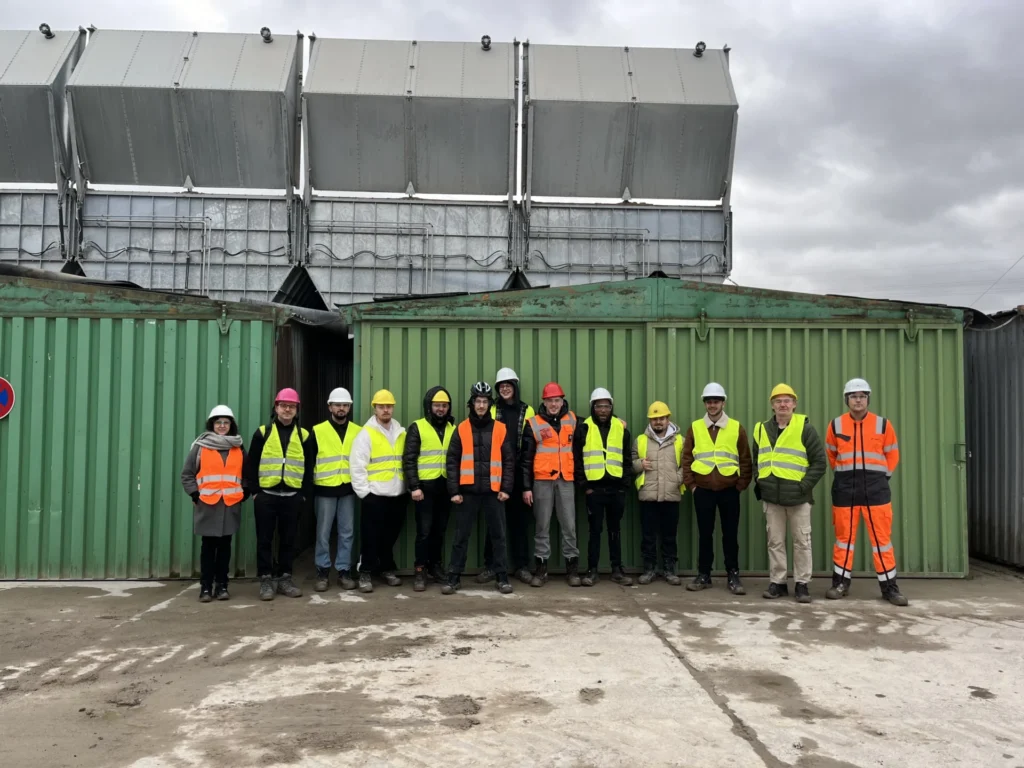
The visit to CEMEX Deutschland AG confronted students with the industrial reality behind construction materials. Cement and concrete were discussed not as abstract climate problems, but as indispensable materials with significant optimisation potential. Topics such as alternative binders, recycled aggregates, and process efficiency helped students understand both the limits and opportunities of industrial transformation.
Block 7 & 8: Reuse and Recycling and final Exercise
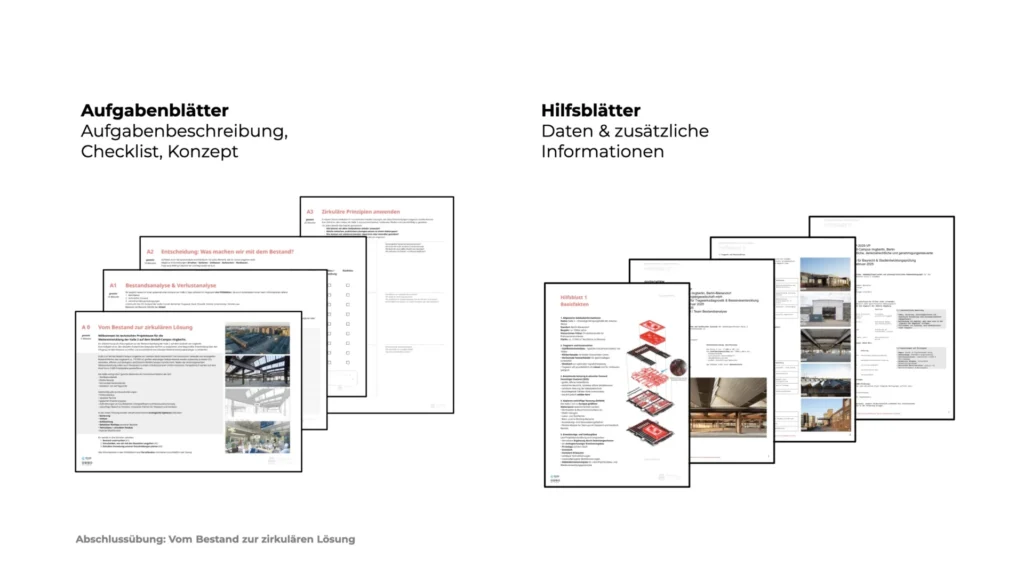
Reuse and recycling were deliberately placed late in the course. By this point, students understood that recycling is not the starting point of circularity, but a fallback option when earlier decisions fail. The block focused on realistic reuse potentials and best practices, delivered by Prof. Patrick Teuffel and his work in the ReCreate Project. After that the students tests their all circular wisdom and applied circular strategies in the practical exercise, with some insights shared on the case of Ring Berlin project.
Why Vocational Education Matters More Than Guidelines
Feedback from teachers and apprentices revealed a recurring issue: circular construction knowledge often remains in planning offices, policy documents, or pilot projects. On construction sites, established routines still dominate. Vocational education is a key leverage point because it is closely linked to execution. Apprentices assemble, connect, seal, and dismantle buildings. If circular construction is not part of their professional logic, it will not scale.
Teachers also highlighted the value of expert-developed, practice-ready teaching materials, which make complex topics such as life cycles, reuse, and circular construction easier to integrate into everyday lessons. Importantly, circularity was embedded into existing curricula rather than added as an extra subject. This reinforces sustainability as part of professional competence, not an additional burden.
A critical challenge remains. Apprentices often struggle to apply their knowledge in companies where instructors, site managers, or decision-makers lack familiarity with circular construction principles.
Circular construction cannot be delegated to students alone. It requires complementary training for instructors, planners, and management. Without this, vocational education risks producing skilled professionals who face structural barriers in practice.
Circular Construction Is a Skill – and It Can Be Taught.
The experience at the Max-Bill-Schule shows that circular construction is practical, learnable, and directly linked to construction work. It is a professional skill set based on material knowledge, construction logic, and informed decision-making.
We are not stopping after this success. The next steps are already planned:
- Evaluation & Optimization: We are evaluating the results of both pilot runs and will re-engage with the teachers to finalize the materials, including the graphic design.
- Scaling: Based on these results, we will approach other Berlin vocational schools and further expand our cooperation with educational platforms.
- Closing Event: In the summer, we will invite our partners (IHK Berlin, Senat WEB, FH Potsdam, Emil Fischer School, and Max Bill School) to a large closing event to celebrate the achievements and secure the future of the project.
Let’s rethink construction. Let’s preserve value in existing structures. Let’s make Berlin circular.
Feel free to read our previous blog post on the project’s implementation at the Emil Fischer Vocational School: “From Soil to Plate and Back Again: Berlin’s Path to a Circular Food System“.