Funders
European Union
Partners
23 partners as Axel`Òne, Circle Economy Foundation, Grenoble-Alpes Métropole, Municipality of Prato, Departament d’Acció Climàtica, Alimentació i Agenda Rurtal, a.o.
Dates
May 2024 – November 2027
Get in touch

Sarah Keller
Senior Project Manager
SOLSTICE: Rs Strategies for a Circular Textiles Economy
The SOLSTICE project is funded by the EU’s Horizon Europe framework program and aims to promote climate-neutral practices and the transition to a circular economy in the textile industry. The project follows a systemic and holistic approach that considers all phases of waste prevention and is guided by the 5R strategies: Refuse / Reduce, Reuse, Repair, Repurpose, and Recycling. These solutions will be tested and refined in demonstrations conducted in four European cities and regions: Grenoble (France), Prato (Italy), Catalonia (Spain) and here in Berlin (Germany).
The challenge
The textile industry is one of the world’s biggest contributors to water and environmental pollution as well as high greenhouse gas emissions. As the industry is growing rapidly, we are facing significant environmental and social challenges. On average, Europeans buy almost 26 kg of textiles per year and throw away 11 kg of it. Less than 1% of this textile waste is recycled, while over 70 % is incinerated or sent to landfill. Both the production and disposal of textiles are harmful to the environment.
Conscious consumption and long-term use are key – but only 19% of textiles are reused locally and only 0.33% of purchased clothing is repaired in Berlin, as the analysis with the support of Circle Economy shows. Our consumer behavior is unsustainable, the collection of textiles is inefficient and recycling using existing technologies is too complex.
Our approach
SOLSTICE aims to develop methods and strategies to implement the 5R strategies, focussing on the first 4 R’s “Refuse/Reduce, Reuse, Repair, Repurpose,” to engage citizens in waste prevention and support the private and public sector in integrating circular business models and promote the development of industry standards and policies.
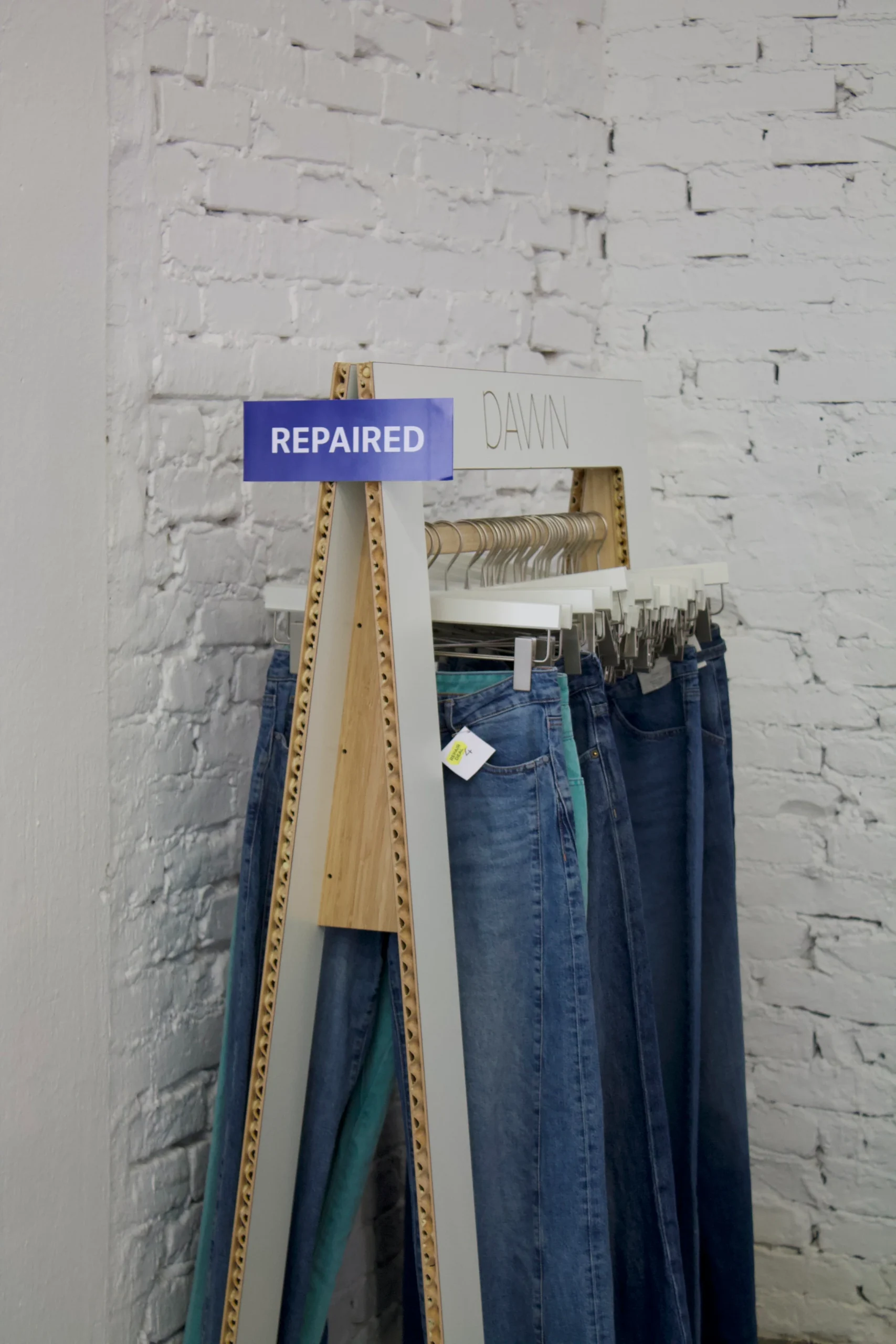
As part of a 24-partner consortium, Circular Berlin analyzes textile flows as well as the business environment and consumer behavior in Berlin. Based on the research results, a repair bonus system, the REPAIR DEAL, is being piloted in collaboration with FixFirst and local repair experts for the repair of denim pants over 14 months (18.09.2025 – 30.11.2026). The bonus can be applied easily via a digital platform. Customers receive a 50% discount on the repair of a pair of denim pants.
The REPAIR DEAL is intended to give Berliners access to simple and affordable textile repairs. By promoting a culture of conscious consumption, the pilot project creates a win-win ecosystem: customers receive inexpensive repairs and repair services benefit from an economically viable business model – and together we reduce textile waste on the way to becoming a zero waste city.
The socio-economic and ecological impact of the pilot will be comprehensively evaluated at the end of the project in order to create replicable blueprints.
The outcomes
The SOLSTICE project supports sustainable growth in the textiles sector by raising customer awareness, enhancing recycling with new sorting methods, ensuring feedstock traceability using the Digital Product Passport, and providing data and guidelines to decision-makers.
The REPAIR DEAL creates a reliable data basis for the expansion of decentralized repair infrastructures and provides concrete recommendations for economic policy instruments such as ecomodulation to promote a sustainable, local circular economy.