
Briefly introduce yourself and your organization: Who are you, what exactly do you do, and what is your core mission in a few sentences?
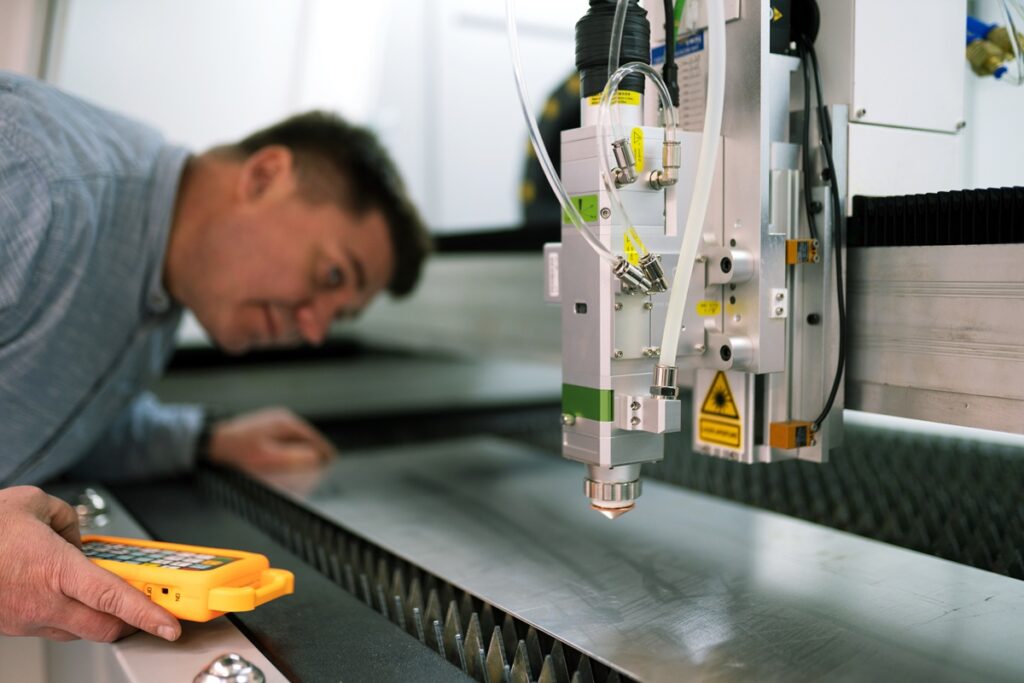
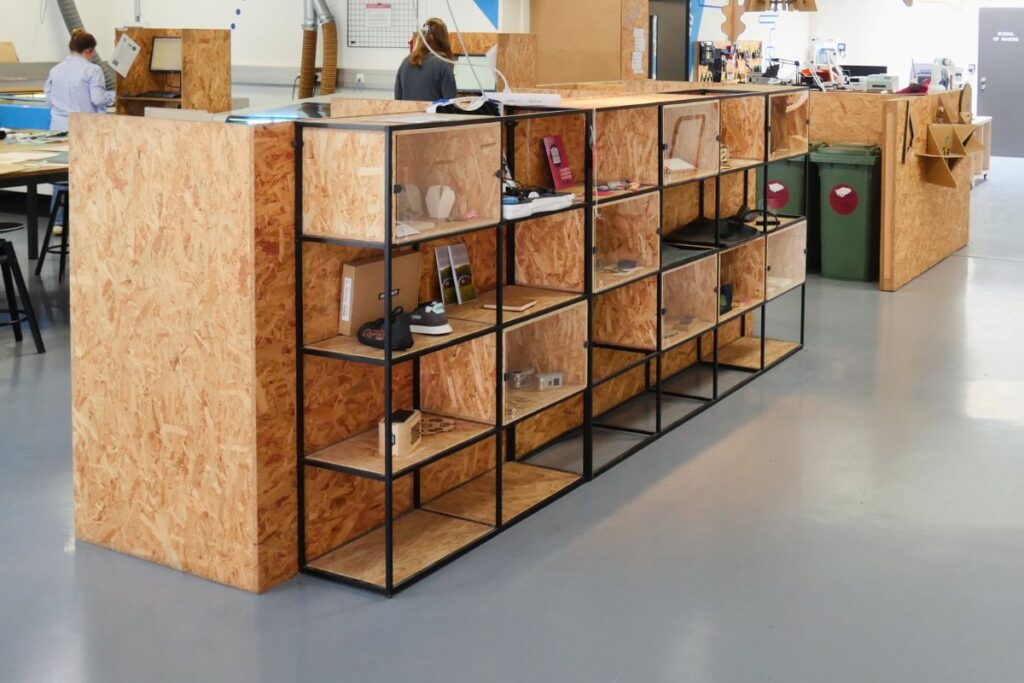
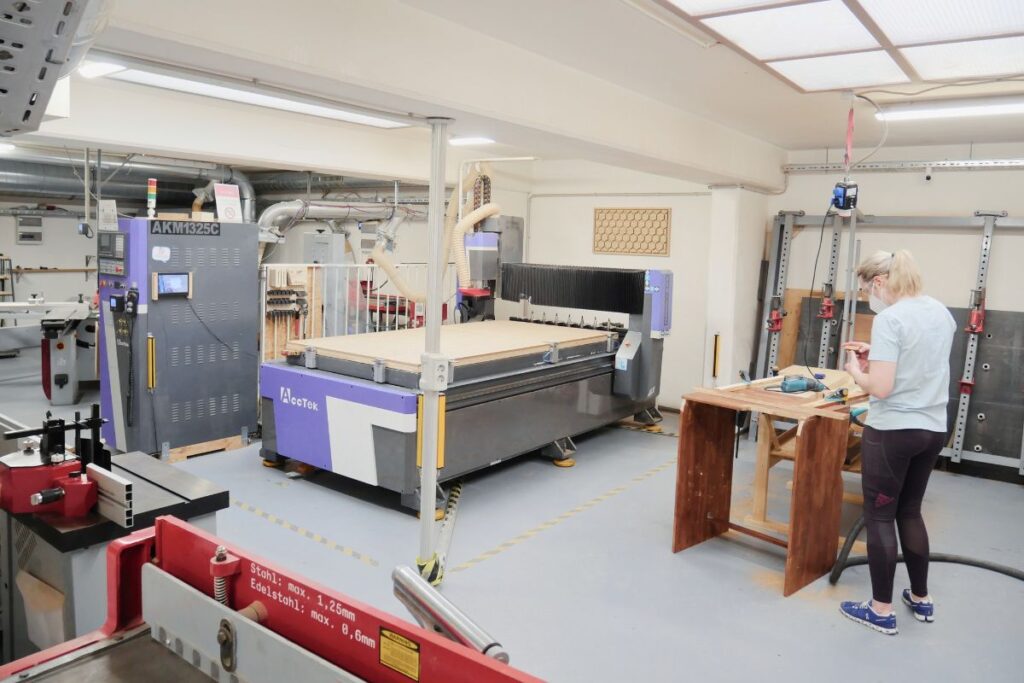
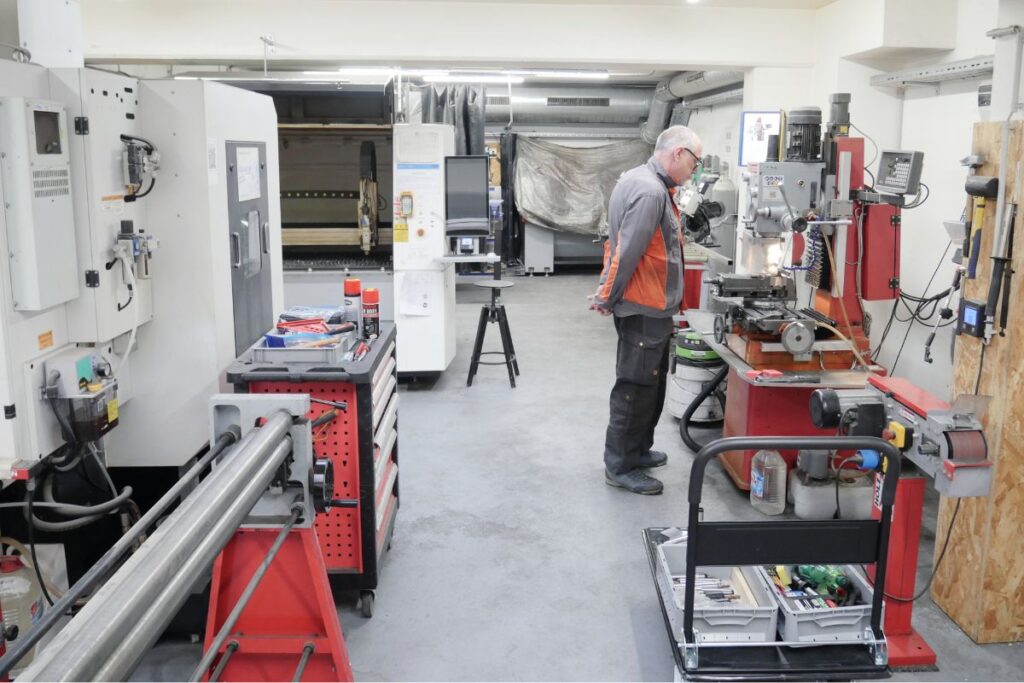
My name is Roland Stelzer, I am the co-founder and managing director of Happylab. Happylab is a makerspace, meaning an open workshop where people get access to digital production machines, tools, know-how, and a community. Members can work on their own ideas around the clock using 3D printers, laser cutters, CNC milling machines, electronics, and wood and metal workshops.
Our core mission is very simple: We want to empower people to make, repair, develop, and understand things themselves. Not every idea has to become a startup right away, and not every broken object has to end up in the trash. But everyone should have the opportunity to move from pure consumption to active creation.
Was there a specific object, a scene in a workshop, or an everyday observation that made you think: The way we consume as a society, buying everything new and throwing things away over minor issues, is simply absurd? What problem in the linear system did you want to solve?
For me, it was less about a single object and more about a recurring observation: Many things don’t fail because they are truly broken or unusable, but because no one has access to tools, spare parts, knowledge, or time anymore. A small plastic part breaks, a casing is no longer available, a bracket doesn’t fit—and suddenly an entire product is replaced.
That is absurd because the actual resource is often still there. The problem with the linear system is that production and consumption are decoupled. Most people no longer know how things are made, how they are structured, or how they can be modified. That is exactly where we come in. When you provide access to machines, knowledge, and a supportive community, “throw away and buy new” very often turns into “understand, repair, improve, or rethink.”
What are your biggest successes so far?
A major success is certainly that a small basement workshop has grown into a professional open workshop infrastructure, which today ranks among the largest maker communities in Europe. Happylab currently has locations in Vienna and Berlin with over 2,000 members. In Vienna, we now operate a makerspace of around 900 m² with 24/7 access, workshops, digital production machines, coworking spaces, and training programs.
Our successes become particularly tangible in our usage numbers. Through the Happylab Innovation Cluster, 2,278 people have realized their projects with us. The machines were used 282,104 times during this period. A total of 107,261 machine hours were accumulated, 57,169 of which were for 3D printing. These are not only impressive numbers but also represent many moments where people have independently developed, repaired, tested, or produced things in small batches.
In addition, there are countless projects from the community: startup prototypes, architectural models, furniture, spare parts, art projects, educational projects, small-batch products, and experiments that probably would never have existed without open access to this infrastructure.
Is there a specific anecdote from your daily work with your community or politicians that you tell over and over again because it perfectly captures the essence of your project?
What I always share is that typical moment when someone comes to Happylab for the first time and says: “I’m not really a technical person.” Two weeks later, that same person is standing at the laser cutter, building their own object, discussing material thicknesses, and perhaps even helping the next person.
For me, that demonstrates the true purpose of the project. It’s not just about machines. It’s about self-efficacy. People realize: I can understand things. I can make something. I can solve a problem without waiting for a finished product to exist on the market.
Especially in a time when technology is often experienced as a black box, this is enormously important. A makerspace opens this black box a bit. It makes technology physical, accessible, and social.
What was the biggest financial or regulatory hurdle in building an open workshop infrastructure in Vienna, and how did you overcome it?
The biggest hurdle was certainly that a professional makerspace is a very capital-intensive infrastructure, yet it needs to remain low-threshold and affordable. High-quality machines, security systems, space, personnel, maintenance, training, and insurance cost a lot of money. If we were to pass these costs on 1:1 to the users, the offering would no longer be open and inclusive.
For the new location in the Stuwerviertel, financing was therefore crucial. We invested a total of around 1.5 million euros. Half of this came from our own funds, the other half through funding from the FFG (Austrian Research Promotion Agency) and the Vienna Business Agency. This was the leverage needed to turn a classic open workshop into a professional innovation hub that also works for startups, SMEs, and more demanding projects.
In terms of regulations, the challenge is running a publicly accessible workshop with machines that are normally found in highly controlled industrial environments. The solution was a very rigorous system of training, access authorizations, documentation, clear rules, and a culture of responsibility. Openness only works if safety and quality are professionally organized.
How do you reach your target audience effectively? Which communication channels work best for you and why?
Our target audience is very diverse: students, designers, architects, artists, startups, SMEs, school children, apprentices, hobby makers, people interested in repair, and those who simply want to solve a specific problem. That’s why no single channel works on its own.
Social media is very important to us because it makes projects visible. When people see what others have built, it immediately sparks the question: “Could I do that too?” Newsletters work well for our existing community, for things like workshops, new machines, or open calls. Traditional PR is important to reach a broader audience and bring the topic of making out of the niche. However, events, guided tours, and open formats are probably the most powerful because it’s hard to explain the atmosphere of a makerspace in abstract terms. You have to see the space, hear the machines, and touch the projects.
Communication always works best when we aren’t just explaining how great our infrastructure is, but when real projects from the community become visible.
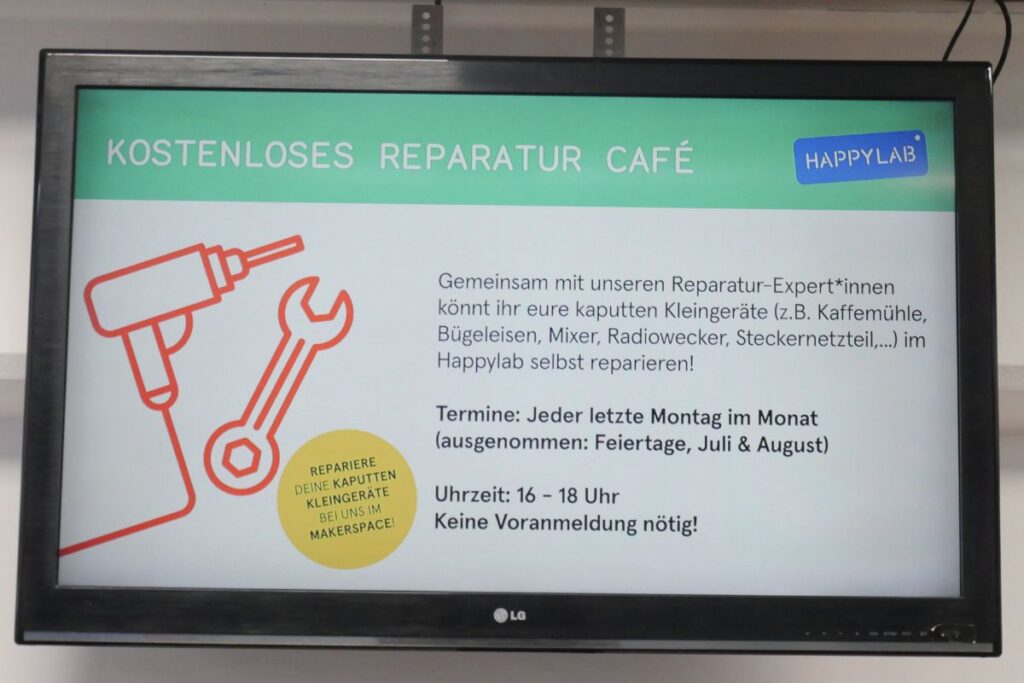
How important is a strong visual identity to your success? What has helped to appeal to a wider audience?
A strong visual identity is very important, but not in a glossy, high-end sense. It must build trust while conveying: This is a place where you are welcome, even if you aren’t an expert yet.
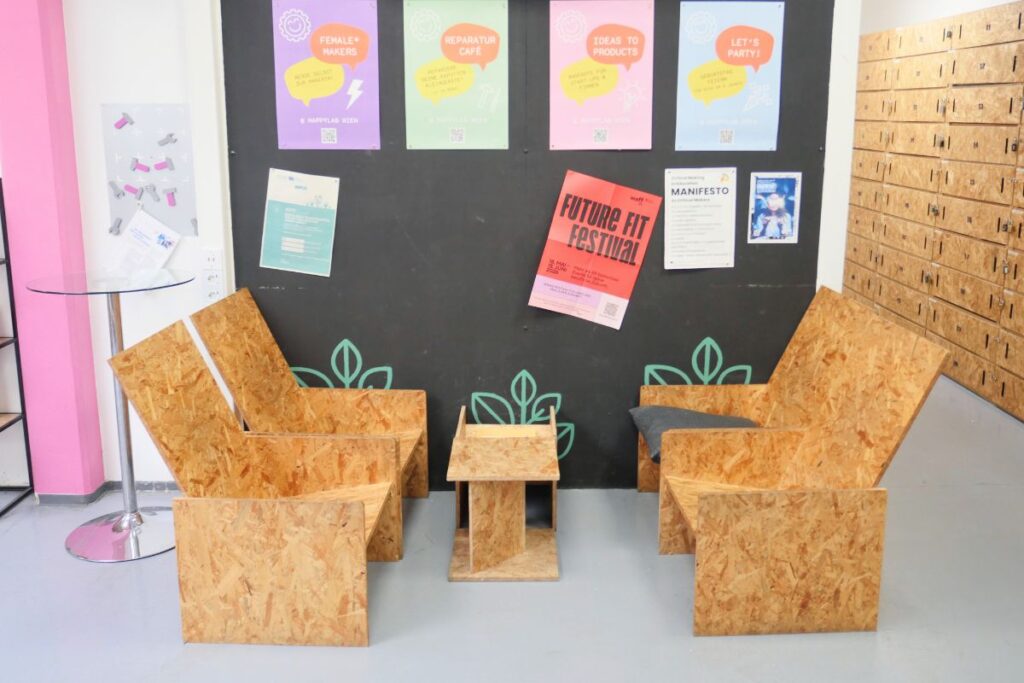
Maker culture can quickly seem very technical, male-dominated, and intimidating. Clear, friendly, and accessible communication helps lower this barrier. We have learned to show not just machines, but people, projects, and concrete application scenarios. A laser cutter is abstract to many. A self-built piece of furniture, a repaired part, a piece of jewelry, or a prototype immediately tells a story.
The brand thus helps turn a “high-tech workshop” into a space of possibilities.
How do you evaluate the support from the City of Vienna? Does the administration act as an enabler or more of a brake? Are there specific networks without which your model might not work at all?
Our experience with Vienna has been overwhelmingly positive. Of course, in any administration, there are processes that take time and sometimes require patience. But fundamentally, we have experienced Vienna as a city that takes open innovation infrastructure, startups, education, digitalization, and the circular economy seriously.
Without networks like the Vienna Business Agency, the FFG, educational institutions, design and creative networks, as well as European programs, our model would have been significantly harder to implement in its current form. A makerspace is not a traditional company, nor is it a traditional educational institution or a purely cultural project. It lies exactly in between. Therefore, you need partners who understand hybrid models.
The city and its institutions have been enablers for us at crucial points—especially when it came to building infrastructure that not only helps individual companies but an entire innovation ecosystem.
What part of your concept could immediately serve as a blueprint for other European cities, and what is perhaps too specific to Vienna to be copied elsewhere? What were the learnings from expanding, for instance, to Berlin?
The core principle is highly transferable: low-threshold access to professional production infrastructure, combined with training, a community, 24/7 access, and a clear do-it-yourself approach. The membership model, standardized training courses, the combination of workshop and coworking, and the clear distinction between “We don’t produce for you” and “We empower you to produce yourself” also translate well.
What cannot be copied 1:1 is the location logic, funding landscape, real estate prices, administrative culture, and local target groups. In Vienna, a lot works through long-term networks, public innovation funding, and a relatively strong culture of institutional cooperation. In Berlin, the scene is larger, more international, and more fragmented. There, you have to position yourself even more clearly regarding who you are for and how you fit into an already very dense creative and startup ecosystem.
The most important learning: You can copy machines and processes, but not a community. A community has to grow locally. You need people on site who can carry, moderate, and translate the space.
The circular economy and maker culture require an incredible amount of patience and often a certain stubbornness. Are you a rebellious person by nature, or did working with the system make you that way?
I wouldn’t call myself rebellious in the traditional sense. But I certainly have a fundamental skepticism towards the phrase, “That’s impossible.” Happylab essentially emerged from exactly this attitude. We wanted access to machines and tools, so we created it. Then we realized that other people had the exact same need.
Working with the system doesn’t necessarily make you rebellious, but it does make you persistent. You learn that change rarely happens through one grand gesture, but through many small steps: a funding application, an approval, a training session, a new safety concept, a conversation with an institution, a new format for the community. You need patience, but also the willingness to explain things over and over again.
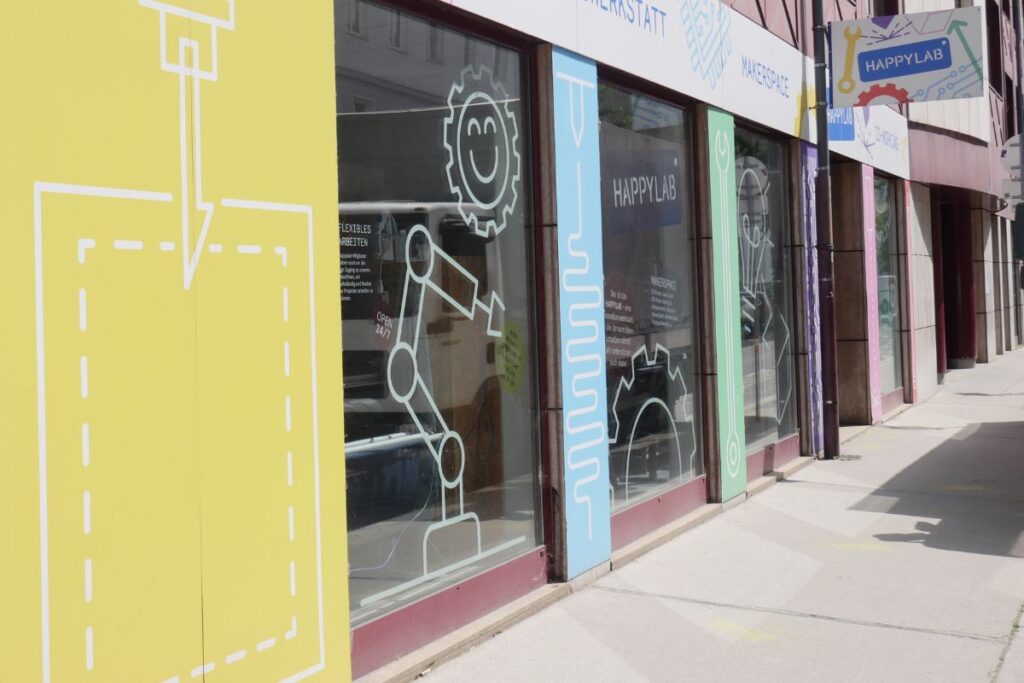
When you see every day what people can repair or build themselves if you just give them the machines: Does that change the way you walk through the city in your private life? Do you look at shop windows, broken objects, and the pressure to consume with different eyes now?
Yes, absolutely. When you see every day what people can produce themselves, your perspective on products changes. You no longer just see finished objects; you see materials, construction, joints, weak points, and possibilities.
I often catch myself looking at an object and thinking: That could be repaired. That could be designed better. This spare part could be printed. This bracket could be milled. This defect shouldn’t have to be the end of the product.
At the same time, you become more aware of how heavily our everyday lives are geared towards convenience and interchangeability. Many things are designed in such a way that repairing them is unattractive or almost impossible. The maker perspective provides a counterbalance here: It shows that consumption is not the only relationship we can have with things.
When you compare the original idea with today’s reality: At what point did you have to adapt the concept the most because theory didn’t hold up in practice?
The idea we had to adapt the most was that a makerspace works simply through open access. In the beginning, you think: You set up machines, open the door, and the community will organize itself. In practice, openness requires a great deal of structure.
We learned that a good makerspace consists not only of machines but of processes: training, reservation systems, maintenance, safety, communication, community management, clear rules, and good support. The more professional the infrastructure becomes, the more important this invisible background work becomes.
The second adaptation was the target group. Originally, it was mostly tech-savvy tinkerers and makers who came to us. Today, startups, designers, artists, students, schools, SMEs, and people with no prior technical experience also work here. That has changed our language, our formats, and our responsibility. We don’t just have to serve experts; we have to enable entry.
However, the basic idea has remained the same: People should have access to tools, knowledge, and community so that they can realize their own ideas. We just know much better today how much professional infrastructure is needed to make this freedom truly work.
Roland Stelzer
Happylab GmbH
info@happylab.at
www.happylab.at