Published by
The interview is part of the EUKI project:
From Waste Prevention to Social Inclusion: Inside fairKauf eG.
Interview with Nicola Barke from fairKauf eG.
“Our goal is to create a professional system that combines both: reuse instead of throwing away, along with qualification and employment for people with hindered access to the labor market.”
What exactly do you do, and why did you choose the legal form of a cooperative (eG)?
What is the advantage of regular citizens holding shares compared to a traditional company?
Local engagement. Involvement of the city’s society, on which the success of the cooperative also depends: delivery of in-kind donations, purchasing of goods, volunteer work. Greater local awareness; knowing the company’s purpose leads to greater acceptance.
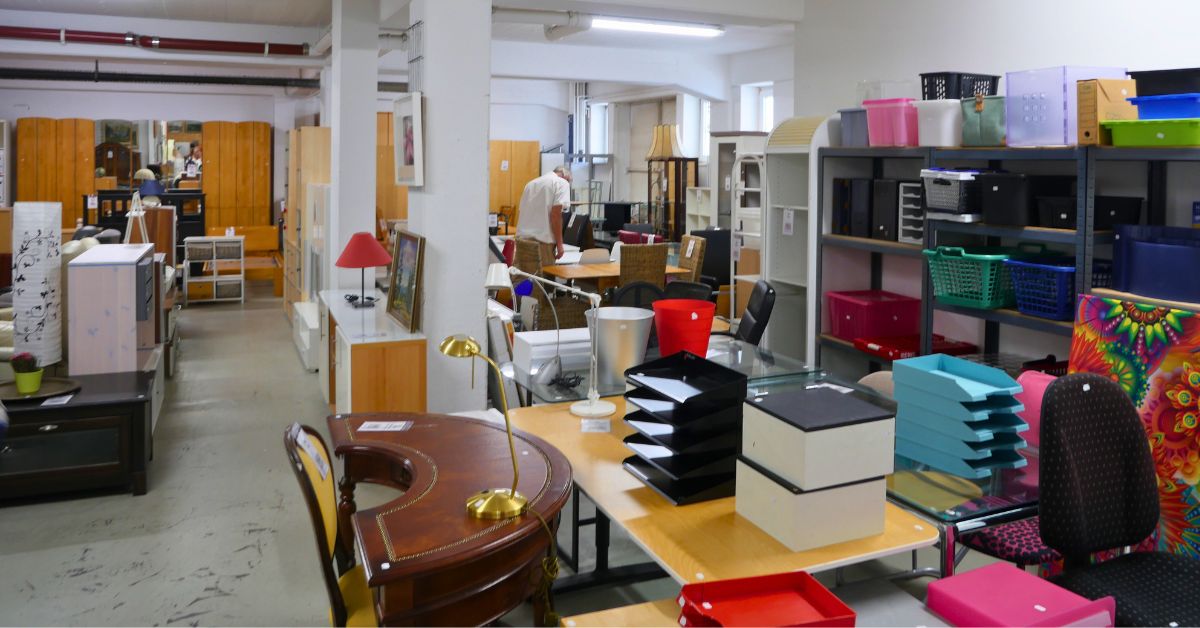
fairKauf eG combines social responsibility, sustainability, and economic action. In our eight secondhand department stores, we sell well-preserved donated goods while simultaneously qualifying long-term unemployed people for reintegration into the labor market. Our goal is to open up new professional perspectives for people while conserving resources at the same time.
The cooperative model is the ideal legal form for this. It stands for co-determination, democratic decision-making, and social responsibility. With us, the rule is: one member, one vote, regardless of the size of the investment. Our members actively shape the development of the cooperative. Unlike a traditional company, the focus is not on profit maximization, but on sustainable benefits for people, society, and the environment.
Was there a specific everyday observation, perhaps during household clearances or with bulky waste, where it became clear: we need to counter the disposal of intact items with a professional system?
The idea for a secondhand department store emerged during a time of rising unemployment and the realization that there is too little support for people with declining purchasing power. When searching for solutions to the problem, it quickly became clear that it had to be a self-sustaining, sustainable, and forward-looking solution.
The existing contact points, such as clothing banks, food banks, etc., did not fully align with our view of humanity. While they are still necessary, we felt that human dignity is not sufficiently respected when alms are distributed.
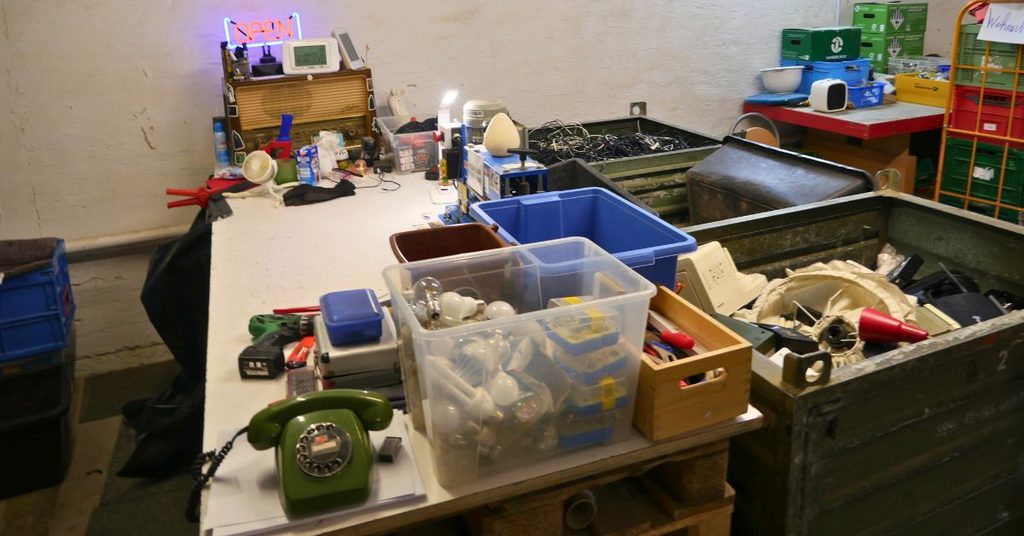
The solution was found through the observation that many well-preserved pieces of furniture, household items, or electrical appliances are thrown away every day, even though they could still be used without any problems. At the same time, there were many people who could hardly afford new purchases. This gave rise to the idea of creating a professional system that combines both: reuse instead of throwing away, along with qualification and employment for people with hindered access to the labor market. Both aspects support the original approach of helping low-income individuals. Additionally, the concept of resource conservation is brought into focus.
How difficult is it in everyday life to make people understand that fairKauf is not a free disposal station for broken bulky waste?
That is actually one of our biggest challenges. Unfortunately, many people confuse a donation with free disposal. Disposing of damaged or dirty items causes significant costs for us – personnel costs, disposal costs, transport, and storage capacities.
However, as a non-profit cooperative, we want to invest our funds in our social work and not in waste disposal. That is why we are very transparent about which donations we can accept. Most people are understanding when we explain that we can only take items that we can actually resell.
How difficult is the balancing act between running a commercially successful department store on the one hand and giving employees the necessary socio-pedagogical space on the other?
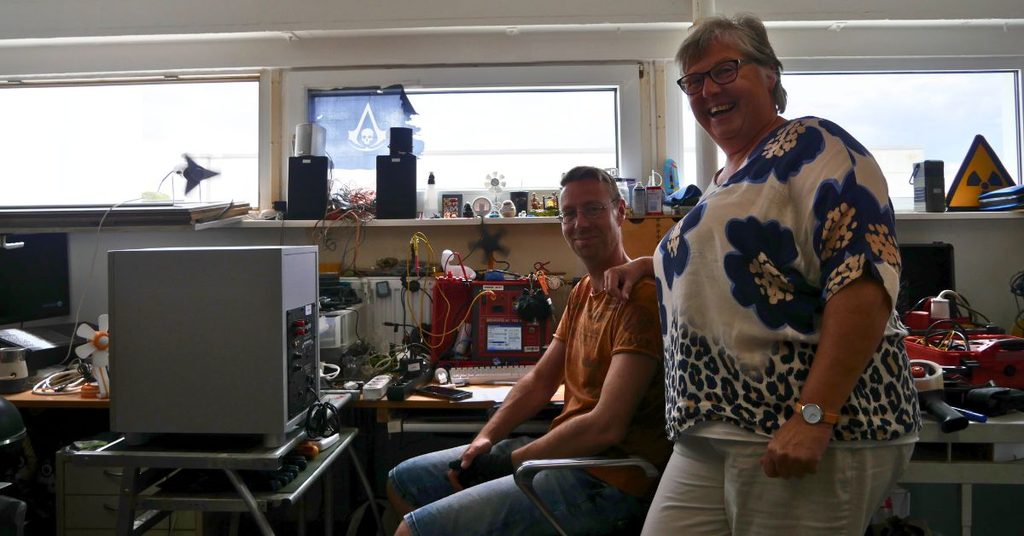
This balancing act is part of our everyday life. We have to find a balance between our social objectives/qualification and revenue so that everything can be financed. Our employees bring very different prerequisites, both the employees subject to social insurance contributions and those in employment promotion programs. The program participants sometimes require intensive support. That is why our social workers work closely with the technical instructors.
Economic success and social responsibility are not mutually exclusive – quite the opposite. Our qualification takes place directly in everyday work. This requires patience, time, and flexibility, but it is exactly what defines fairKauf. Qualification for practice in practice through integration into the team.
Our core staff is not only well-trained professionally but is also given ample opportunity to develop personally in order to have the necessary tools for everyday life at fairKauf. This ranges from first aid, fire protection, and addiction prevention training to instructor aptitude tests, coaching for instructors and management training, resilience workshops, mental health first aid training, and supplementary rehabilitation-pedagogical training.
Unusual incidents happen more frequently here than in other companies, but they can be handled well or avoided entirely by our instructors.
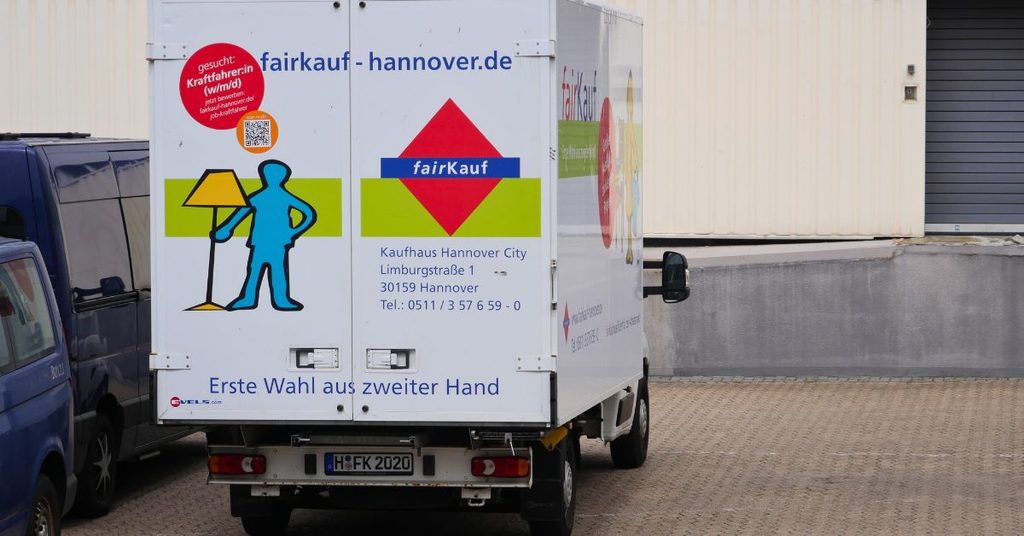
Anyone is allowed to shop with you, but low-income individuals receive an additional 20% discount. How important is it for the concept that bargain hunters and people who truly rely on cheap goods meet in your stores?
That is actually an essential part of our concept. Our department stores are deliberately open to everyone. This creates a lively mix of different customer groups. Low-income individuals benefit additionally from our social discount, while many customers discover secondhand out of conviction or for sustainability reasons. This diversity helps break down reservations and shows that sustainability and social participation can connect all people.
It is also especially important that nobody is marginalized here. There is no discrimination. Because anyone can shop with us, customers are not labeled as “needy” just because they walk through our doors. At the same time, the normal customer mix has the advantage that, in consultations and processes, we operate just like regular retail, meaning our qualification participants and trainees are also prepared for other employers. The bargain hunters additionally bring in goods donations and vital sales revenue to secure sustainable financing.
If we were only allowed to sell to the “needy,” the sustainable concept would no longer work. We would then just be a project that would end when the project funding ran out. As it is, we are a non-profit company that operates department stores to qualify long-term unemployed people and finances this from its own revenue.
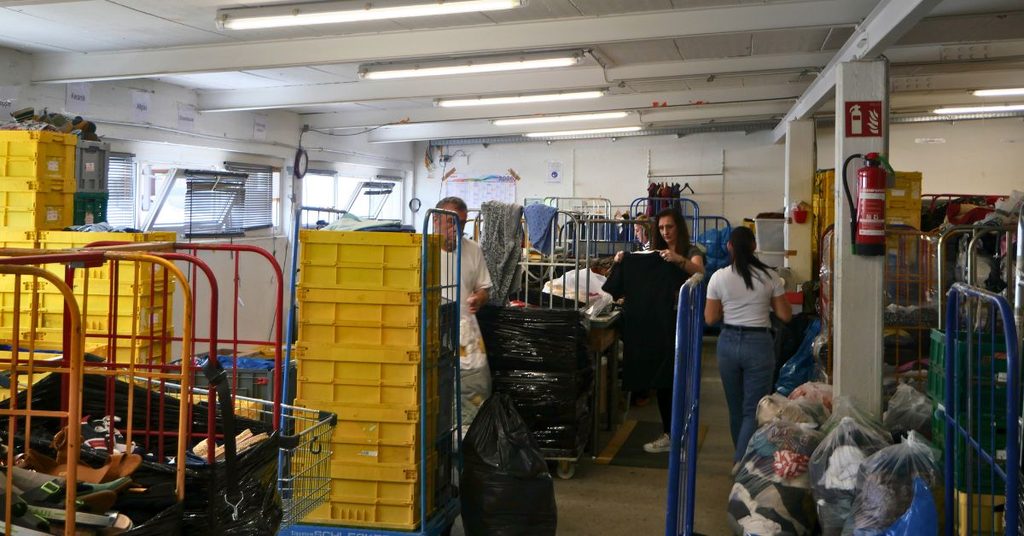
You operate eight locations in and around Hannover, making you one of the largest initiatives of this kind. Do you have concrete numbers on how many people have managed to re-enter the labor market through you? And: What prevents us from building a system like fairKauf in every major German city?
Since our founding, several thousand people have participated in qualification and employment measures at fairKauf. A large portion of them were subsequently able to take up employment again or start an apprenticeship.
Around 80 percent of our socially insured employees were previously unemployed themselves, some long-term. This means we have created additional jobs at fairKauf ourselves.
A model like fairKauf can generally be implemented in other locations as well. This is already practiced in many cities, although mainly under other corporate forms or under the umbrella of a carrier organization. The prerequisites are strong, committed, and courageous partners from politics, financial administration, job centers, business, and civil society, as well as a long-term financing approach. Building collaborations requires time and joint commitment.
How is this huge construct of shops, logistics, and personnel support ultimately financed? And how do you experience the support from the Hannover city administration or the job center—are they drivers of your idea, or do you often struggle with bureaucracy?
Our financing is based on several pillars. We generate the largest share ourselves through the sale of our secondhand goods.
In addition, there are funds from institutions for which we provide services, e.g., subsidies for qualification measures such as AGH (work opportunities) through the JobCenter. These usually cover the costs for our social workers and a pro-rata share for instructors. In close cooperation with the job center, employment agency, and rehabilitation providers, we receive subsidies for hiring long-term unemployed individuals. However, any company can receive these if they are willing to put in the effort of onboarding and support. The city of Hannover supports the training of young people with placement obstacles through a potential training subsidy.
We grant a 20% discount on the sales price to people with low incomes. 19% of our customers regularly make use of this, which means we grant almost €260,000 in discounts per year. In recent years—depending on how full the municipal coffers are—the state capital Hannover (LHH) has reimbursed us €30,000.
Additionally, before planned projects, we naturally ask for support from foundations, the Klosterkammer, banks, etc. Overall, however, these amounts are negligible.
These partnerships/cooperations are indispensable for our work. At the same time, we also experience the challenges of bureaucratic processes and changing legal frameworks. It is getting harder from year to year. This makes a continuous dialogue between all parties involved all the more important so that social employment projects can operate successfully in the long term.
When you sort tons of donated but completely intact things every day: Does that change your personal view of our consumer society? Do you see shop windows, Black Friday deals, or bulky waste with different eyes now?
Definitely. Anyone who sees every day how many high-quality and functioning items are discarded automatically develops a different view of consumption. Many products have a significantly longer lifespan than they are actually used for. This shows how important reuse and conscious consumption are. At the same time, we also see that the proportion of non-repairable items has increased in recent decades and there is a need to consciously counteract this.
Secondhand is no longer just a cheap alternative, but an active contribution to climate and resource protection.
If you compare the original idea that fairKauf started with in 2008 with today’s reality: At what point did you have to adapt the concept the most because the theory didn’t hold up in practice?
Right in the first week of sales, we realized that our planning – X customers buy for the amount Y – was only correct regarding the planned total revenue. From day one, significantly more customers shopped every day for a much lower average value. Thus, our personnel planning didn’t match, nor did our logistics. We had to grow much faster – hire employees, buy trucks.
The basic idea, however, has remained unchanged to this day: qualifying people, conserving resources, and giving well-preserved things a second life.
The framework conditions have changed:
- Continuous decline in the quality of in-kind donations
- Rising costs for personnel, logistics, disposal, etc.
- Shortage of skilled workers
- Reduction of subsidies for employment promotion
- Increasing demands due to bureaucracy, data protection, digitalization
- Consumer reluctance due to the energy crisis, economic crisis, war, etc.
Because of this, we had to—against our convictions—significantly tighten our acceptance criteria, for example. The continuous development of processes and keeping an eye on relevant changes in the environment/business area is a basic prerequisite for all companies anyway; it’s no different for us.
The demands on qualification and integration have also become more diverse. Our strength lies in adapting to these changes without losing sight of our social values and goals.