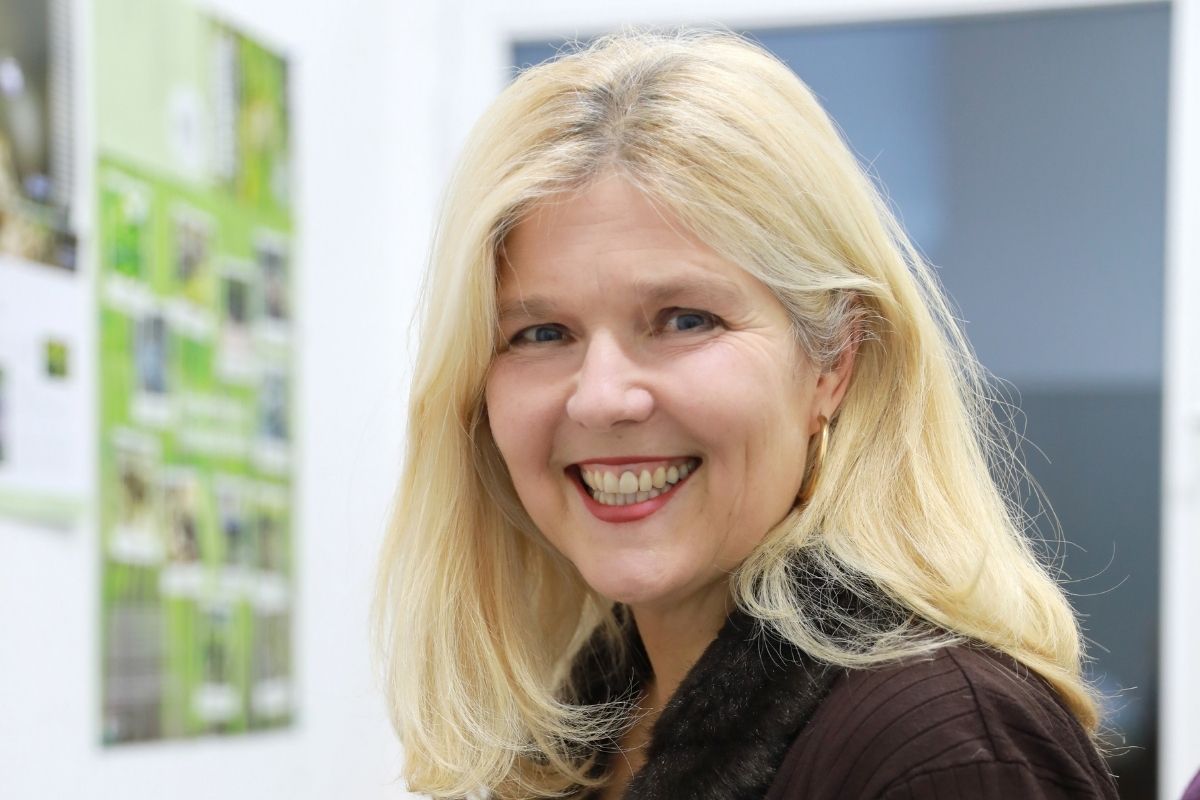
As part of LOOPTOPIA, we sat down with Svenja Pelzel from Stiftung Naturschutz Berlin. As our main sponsor, the foundation enables numerous initiatives that turn ecological transformation into a tangible experience in our city. In this interview, she explains how classic nature conservation and the circular economy interconnect, why effective resource protection starts right on our doorstep, and what role formats like LOOPTOPIA play in driving societal change.
The Stiftung Naturschutz Berlin traditionally stands for the protection of biodiversity and urban green spaces. Where do you see the strongest substantive overlaps between classic nature conservation and a citywide event for the circular economy?
Svenja Pelzel: Nature conservation starts right on our doorstep: with the maintenance of green spaces, the protection of biotopes, or the preservation of near-natural habitats. The circular economy is also particularly tangible on a local level: for example, through sustainable swap meets, repair initiatives, and the shared use of resources. There is a common fundamental understanding between nature conservation and the circular economy: our natural resources are finite. Ecosystems must be protected. How we handle raw materials, products, and consumer behavior is crucial for the future of nature and the environment.
While classic nature conservation advocates for the preservation of habitats and biodiversity, the circular economy asks how we can minimize the burden on our natural environment and conserve resources through our way of living and doing business. Both lead to people understanding ecological interrelationships and being able to draw conclusions for their own behavior.
A Berlin-wide circular economy event featuring repair workshops, upcycling, clothing swaps, food rescue initiatives, and sustainable nutrition offers a meaningful platform for this: It demonstrates that resource protection can be a tangible issue and creates networks where actors can collaborate in many different areas. As a foundation, we regularly support projects that involve the networking of various actors through our two funding programs, Trenntstadt Berlin and Abfallberatung Zero Waste.
Initiatives for waste prevention and the reuse of building materials are becoming increasingly urgent for growing metropolises. What concrete contribution must the circular economy make to relieve the burden on natural habitats and resources directly here in Berlin?
Like many issues of our time, the topic of waste doesn’t have the one big solution for all problems. Rather, the circular economy is an area with countless facets. And honesty requires acknowledging that waste doesn’t always cause problems right where it is generated. When we make a concrete contribution to the circular economy in Berlin, it doesn’t automatically relieve the natural habitats and resources here. For example, a t-shirt we reuse leads to less water consumption during cotton cultivation in Turkey. That doesn’t make it any less meaningful, but perhaps sometimes harder to convey.
An essential pillar of your foundation’s work is practical environmental education. How can decentralized, interactive formats like LOOPTOPIA help to carry the sometimes complex concepts of the circular economy into mainstream civil society?
The million-dollar question is how we get people to change their own behavior. We know from numerous studies that it usually isn’t due to a lack of facts. Everyone knows what they should actually be doing, but they still don’t do it. Formats like LOOPTOPIA can help connect knowledge with concrete action.
The transformation into a circular city requires a profound rethinking. What long-term developments do you hope to see through the targeted promotion of local, innovative actors and networks, like those coming together at LOOPTOPIA?
As the Stiftung Naturschutz Berlin, we fund creative projects by numerous actors in this city through the Trenntstadt Berlin and Abfallberatung Zero Waste funding programs. The ideas brought to us are extremely diverse, and that is exactly what makes them so appealing. For example, one actor is trying to reach new target groups through the topic of soccer, an association is recreating a Zero Waste supermarket for children, another is training multipliers or founding a repair academy. As different as the approaches are, the goal is similar: to rethink and change one’s own behavior in the long term.
In November, LOOPTOPIA brings together various initiatives, pioneers, and citizens. From the foundation’s perspective, what central impulse or concrete call to action would you like to impart to this network for your joint work on the future of our city?
The circular economy is more than just waste prevention and recycling. It is also active nature and resource protection. Every raw material saved, every product used longer, and every area protected from unnecessary resource consumption can contribute to preserving our natural livelihood. Let’s make Berlin more resource-efficient together. The city of tomorrow is built on what we make possible together today.