The circular economy in the educational landscape of Berlin requires a long-term, dedicated structural effort. Bringing change into an education system is incredibly difficult. The school system is complex, and introducing new topics alongside rigid administrative requirements demands a lot of effort from everyone involved.
When we launched the “Fit for Circular Economy” (FFCE) project (funded under the Masterplan Industriestadt Berlin), our goal was to find practical ways to integrate circularity into vocational training (Berufsbildung) and provide teachers with usable formats for their classrooms.
Here is a summary of what we learned, the challenges that remain, and our recommendations for the future.
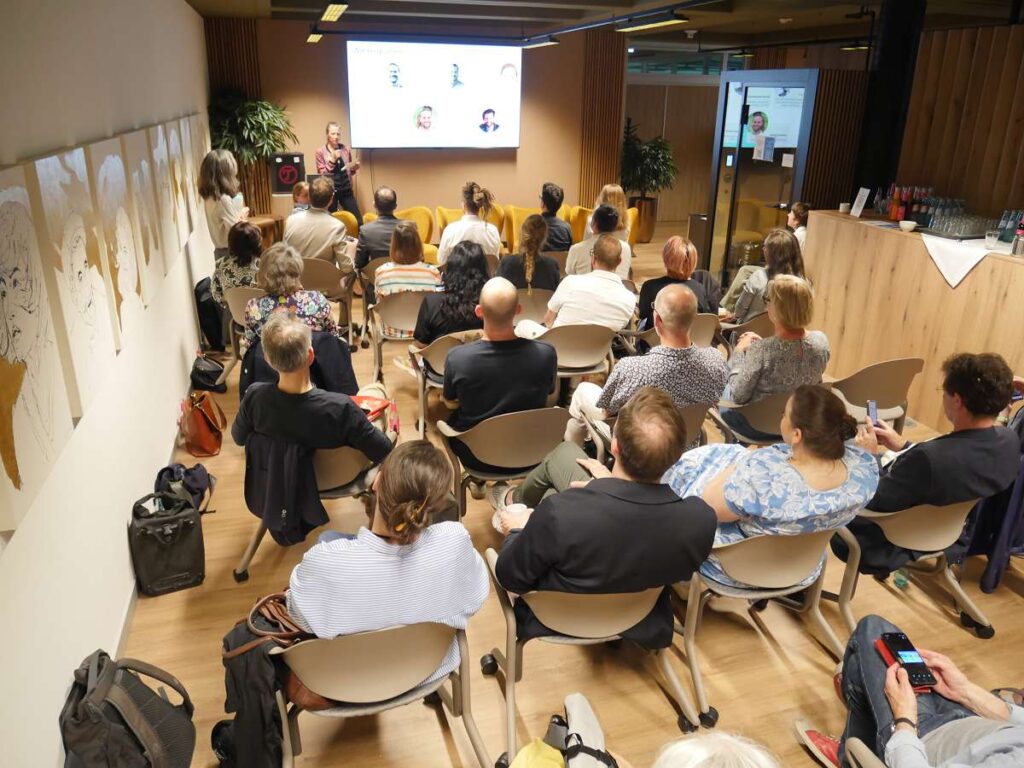
What we learnt on our path.
Right from the start, our first major hurdle was simply getting into schools. Approaching institutions without an introduction or via “cold calling” does not work. Success depends entirely on established networks and internal access. For external providers, finding the key person willing to test new educational models is an enormous challenge. We highly recommend cooperating with the Senate Department for Education (Senatsverwaltung für Bildung) early on to help open the right doors.
Moving Beyond Sporadic “Sustainability” Lessons
One of our primary early observations was that the Circular Economy is simply not systematically integrated into the classroom. It might appear sporadically through various lesson schedules in the general form of “sustainability.”
Future professionals need more than a single, abstract lecture; moving from linear theory to practical, sector-specific application takes dedicated time. A true understanding of the circular economy, especially if we want to showcase practical, sector-specific applications, cannot be transmitted in a single hour.
However, if you want to integrate a new curriculum it cannot be forced from the top down. Berlin’s educational landscape values instructional freedom, meaning that mandates often stall on the classroom floor. Teachers face immense pressure to finish the core curriculum and prepare students (Auszubildende) for their mandatory final chamber exams. When time is short, complementary topics are dropped. To work around this reality, we learned that learning units must be co-created with educators and designed as micro-learning sessions (maximum 90 minutes). These need to be flexible enough to serve as “plug-and-play” material when a teacher falls sick, or to be easily integrated into existing core subjects like chemistry, biology, or economics.
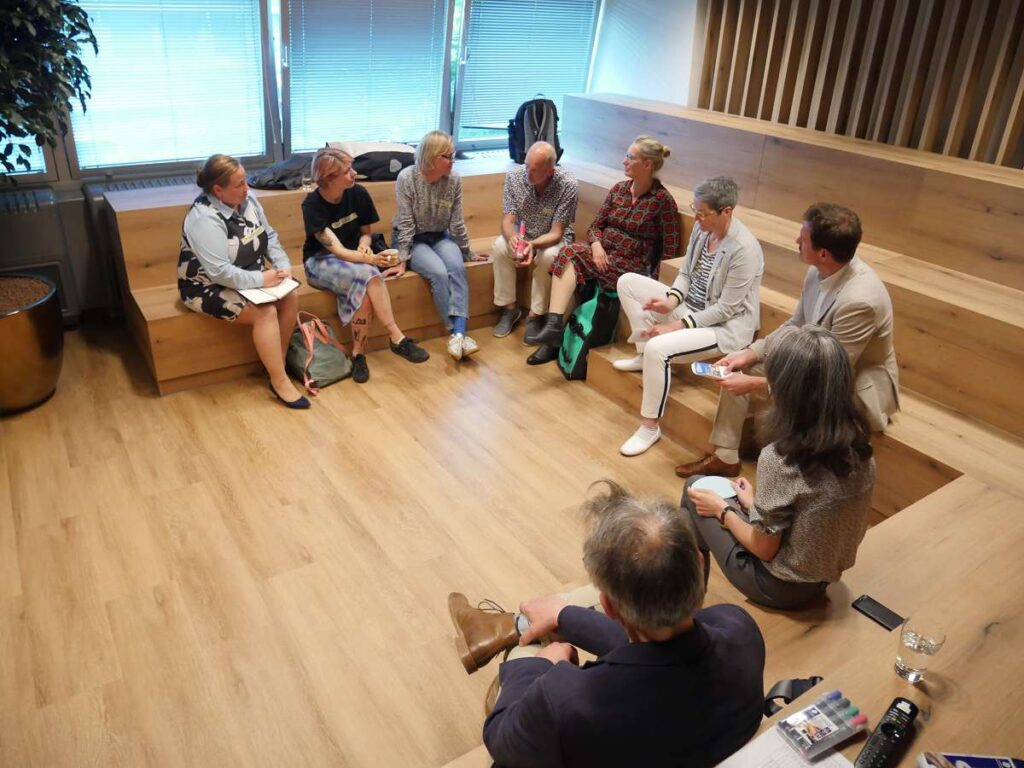
Integration, Not Standalone Courses
When facing the question of whether circular economy should be taught as a single standalone course or integrated as batches into the existing framework, our expert panel had a unified answer: it must be integrated dynamically across multiple existing subjects. This approach is universally relevant for all educational levels, not only vocational schools.
Our pilots at Emil-Fischer-Schule (focusing on circular food systems) and Max-Bill-Schule (focusing on circular construction) demonstrated that when teachers are empowered with high-quality, practical resources, the barrier to adoption drops significantly. However, we must remain fiercely protective of our educators’ time. Circular economy modules should never feel like an administrative burden; they must seamlessly integrate into existing exam-relevant frameworks while adding tangible value.
Another vital point relevant to all educational institutions is the absolute necessity of practical applications. Students must identify the functional elements directly tied to their future professions. This is true for vocational students who need to understand hands-on processes, like assembling, disassembling, or the circular selection of ingredients, just as it is true at the university level for understanding circular entrepreneurship and designing future business solutions.
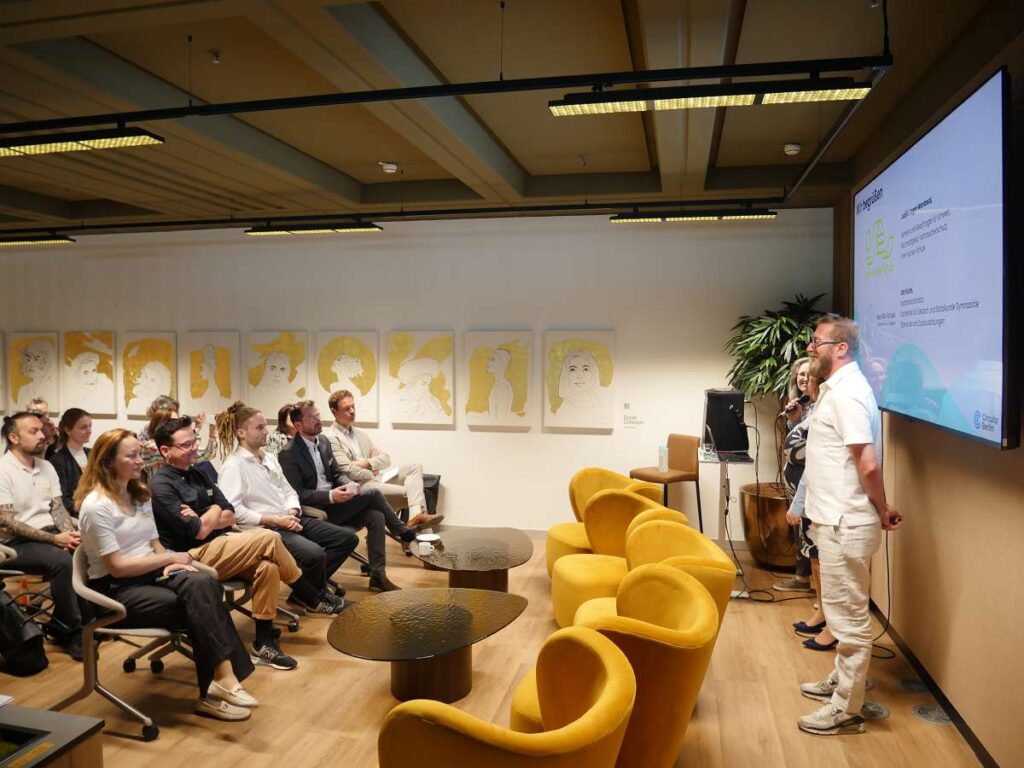
The market gap for graduates
A persistent problem is that the current job market offers very few clearly defined career pathways in the circular economy. Many young professionals face frustratingly linear realities once they graduate. This is why Circular Berlin works simultaneously on supporting a Circular Market, encouraging businesses to adopt these practices in parallel.
By taking students out of lecture halls and bringing them to vibrant, extracurricular places of learning, such as active zero-waste kitchens or circular construction sites, we transform abstract concepts into living blueprints. Circular project flagships, open workshops, and innovative regional companies should be formally integrated as recognized, off-site educational venues.
For small and medium-sized enterprises (SMEs), which make up over 99% of Berlin’s corporate landscape, continuing education must fit into a chaotic daily routine. Business owners and overworked employees will only invest time in training if the material is highly simplified, addresses immediate operational issues (like rising material costs), and offers a clear return on investment (ROI).
Core Recommendations
To make this vision permanent, we have distilled these insights into our key Recommendations. We believe that vocational education holds a massive, underutilized advantage: it is inherently action-oriented. By showing young professionals what they can achieve through small, practical adjustments in their daily trades, we foster a deep sense of personal agency and entrepreneurship.
Circular education is ultimately a form of social empowerment, teaching the next generation that they have the tools to actively design the future.
Political Framework & Public Support
- The Senate should formally anchor the Circular Economy in official vocational frameworks, emphasizing Vocational Education for Sustainable Development (BBNE) and the Twin Transformation (Digital & Green). Curricula should include digital competencies, such as navigating the Digital Product Passport, alongside physical material handling.
- The state should provide financial support for flexible, modular professional training. This includes state-funded Circular Economy Initial Consultations (Initialberatung) for SMEs to lower investment risks.
- Chambers (IHK, HWK), guilds, vocational schools, and trade unions must collaborate. Trade unions, in particular, are vital partners due to their direct access to the workforce, ensuring structural adoption rather than superficial marketing.
Institutional Guidelines Across the Educational Spectrum
Vocational Schools & Apprenticeships
- Build learning formats directly with teachers to ensure usability and self-directed learning, drawing inspiration from initiatives like the Klimakoffer.
- Share internal teaching files and lesson arrangements (didaktische Jahrespläne) peer-to-peer to build a collaborative curriculum and find integration synergies.
- Build active networks with industries to maximize the integration of practical circular knowledge.
- Counter youth climate paralysis (“I can’t change anything anyway”) by intentionally demonstrating their unique, collective role in changing their trades.
Higher Education & Academic Institutions
- Establish cross-institutional project challenges and competitions connecting universities directly with vocational schools and the Chamber of Skilled Crafts (HWK).
- Integrate basic circular economy principles into general coursework (e.g., applied marketing classes focused on circular validation) and enrich theory with mandatory field visits and guest lectures.
- Act as the best practice e.g. for circular public procurement.
Continuing Education & Enterprise Reskilling
- Combine upcoming digital themes like AI and automation with resource conservation to act as an operational accelerator.
- Prioritize brief modules, digital accessibility, and local workplace trialing to align with high-stress SME environments.
- Address real-world, localized operational friction to make the financial return on investment immediately clear to corporate leadership
Using the Fit for Circular Economy educational Toolkit
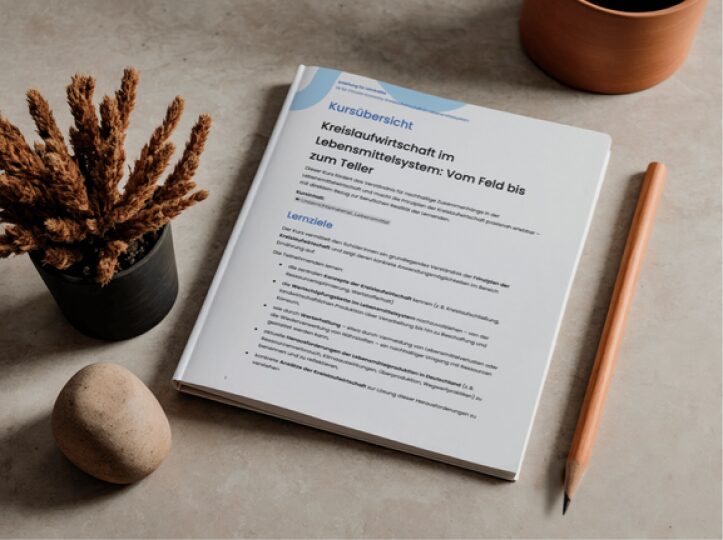
To help scale these approaches across the city, we are releasing our newly developed learning materials for Circular Construction and Circular Food as open-source resources.
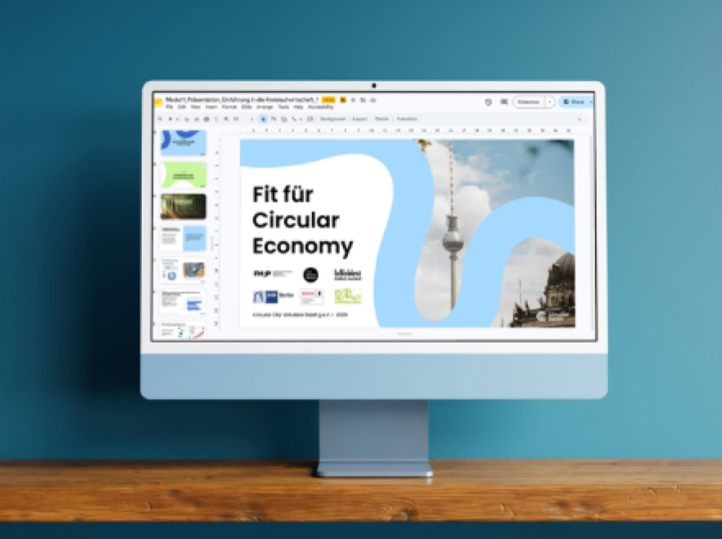
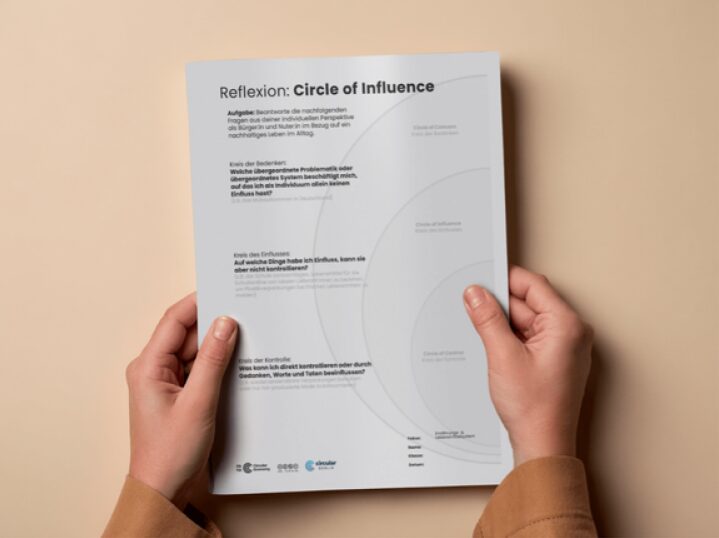
These modules are designed to be plug-and-play, allowing any educator, trainer, or sustainability manager to integrate them into their programs. The toolkit provides straightforward lesson plans, presentation slides, and practical exercises.
Access the Resources
You can download the open-source toolkit, by visiting our project page and Resource Page