The interview is part of the EUKI project:

Markus, please briefly introduce yourself and Baukarussell. Who are you, what exactly do you do, and what is your core mission in a few sentences?
My name is Markus Meissner, and I am a waste management expert. For over two decades, I have been working on topics related to the reuse and preparation for reuse of household products, medical devices, and materials in the construction sector. With the Baukarussell cooperative, alongside Thomas Romm, Sonja Zumpfe, and Jasmin Bermadinger, we have brought together a team of people dedicated to ensuring that the circular economy and social economy can play a role in deconstruction or renovation projects. Together, we generate added value and tangible impacts for the client.
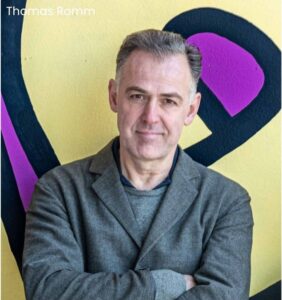
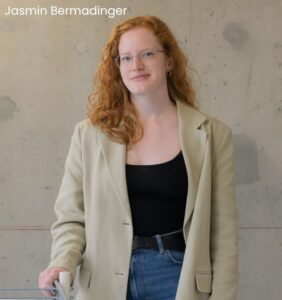
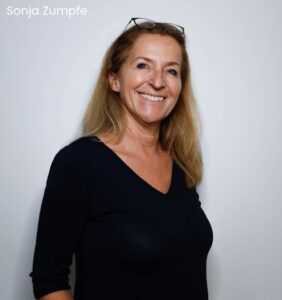
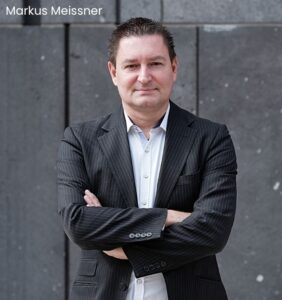
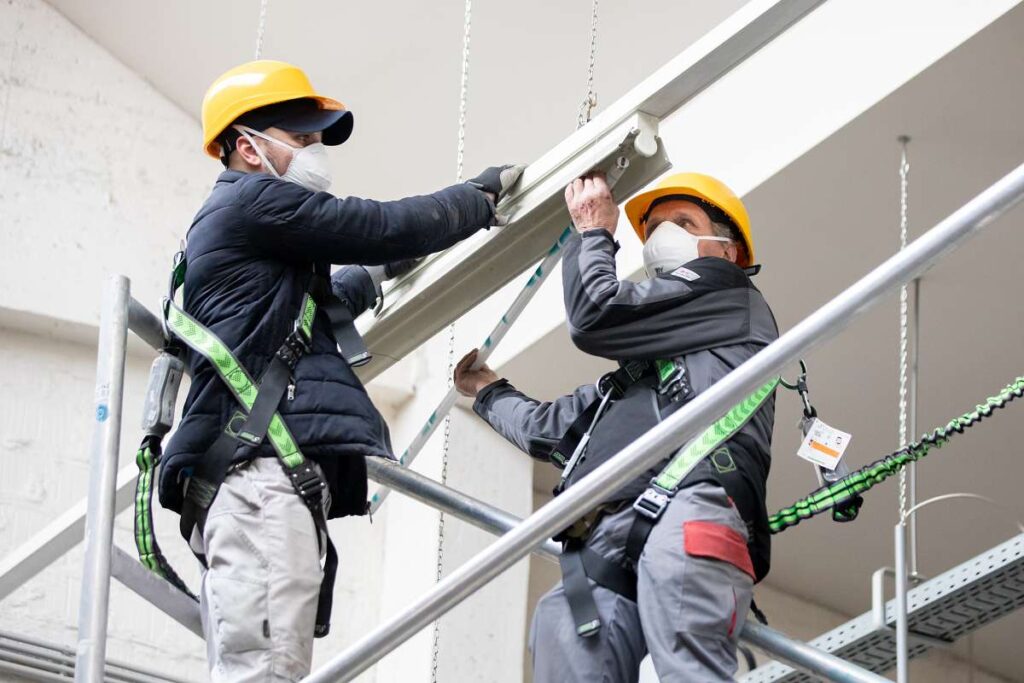
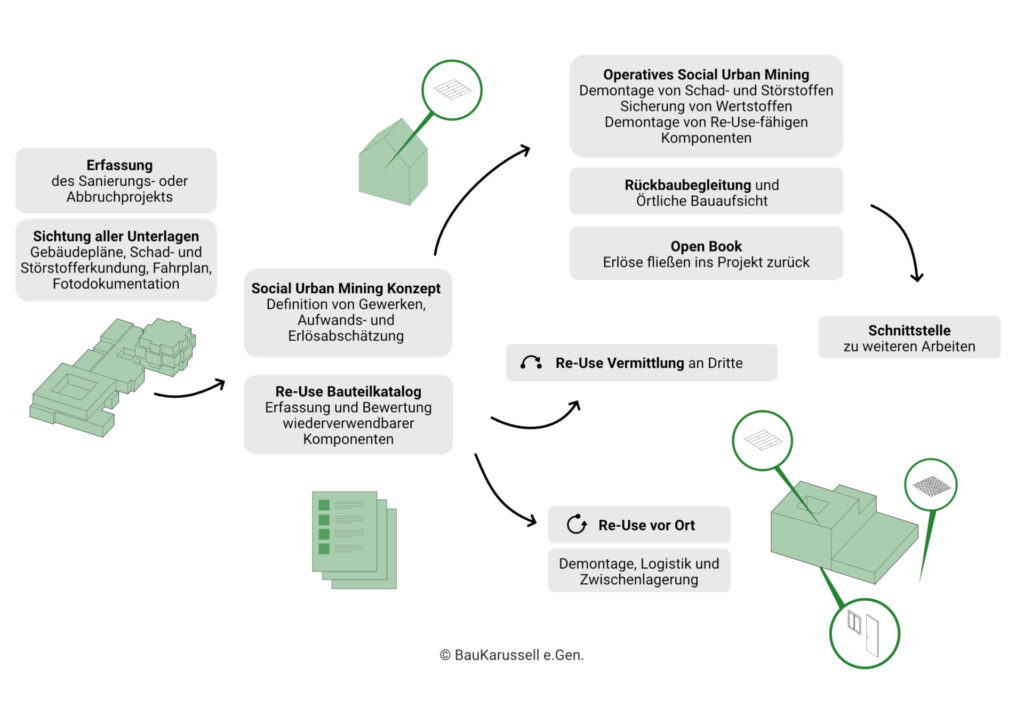
Under the term ‘Social Urban Mining’, we implement a concept where we actively utilize the resources of a building. We take on concrete operational tasks and specific services for the client, which are carried out by social economy enterprises.
Was there a specific moment on a construction site when you thought, “The way we simply shred intact buildings into rubble is just absurd”? What problem in the linear system are you trying to solve, both in the construction sector and on the labor market?
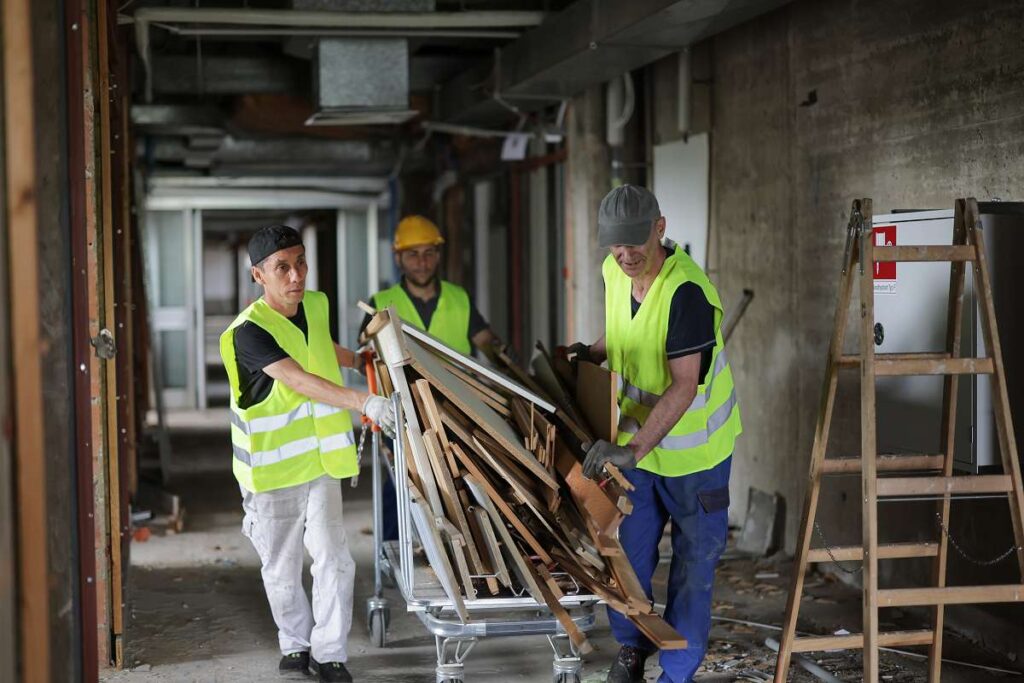
Those moments happen all the time. I can gladly share a very early example. We were invited to a competition that involved the deconstruction of a nursing home—which had been fully renovated just a few years prior—because social housing was planned for the site. We found more than 2,500 wood-aluminum window elements with balcony doors there. Within our consortium, the idea matured that we could dismantle these windows, return them to the manufacturer, refurbish them, and then reuse them in the new building project.
Unfortunately, we didn’t win the competition, and I later watched as those window elements went down the usual path of deconstruction projects:
- Smashing out the windows
- Knocking out the glass
- Collecting the wooden frames separately
That was definitely an “aha” moment where you think: It’s absurd how much functionality we destroy, how much economic value we destroy. That is one of the challenges we face when we talk about problems in the linear system. With current practices, we destroy a vast amount of value and lose a great deal of value creation. On the other hand, by integrating social economy workers, we manage to provide these individuals with partial qualifications and employment, supporting their journey back into the primary labor market. This means shifting their position from being a recipient to becoming a contributor in our social-economic system. Aside from the circular economy and all the quantities and masses we constantly talk about, this is a fantastic impact that is simply philosophically very fulfilling.
What are your biggest successes so far? We are also interested in hard KPIs: tons of building materials saved, people supported in Social Urban Mining, number of large projects, etc.
For every one of our projects, a solid impact measurement is the absolute priority. Through our impact certificate, we not only transparently prove the achieved successes to the client, but we also use them strategically for our PR and media work.
Looking at the numbers: We have been active as a consortium since 2016 and as a cooperative since 2022. By now, we have moved more than 2,000 tons of materials across various construction projects. These are materials that were removed to facilitate the recycling of bulk building materials (i.e., contaminants or hazardous substances). But out of these 2,000 tons, we have successfully facilitated the actual reuse of over 900 tons. That means we retained the functionality, value creation, and economic value of those items.
On the social side, we have supported almost 300 people on their path to re-entering the labor market by providing them with partial qualifications. Through our activities, planning, and operations, these individuals have been able to put in a good 47,000 hours of employment. We are talking about roughly 30 very large-scale implementations with a wide variety of clients.
Is there a specific anecdote from your daily work—perhaps a conversation with a skeptical real estate developer—that you like to tell because it perfectly sums up the purpose of your project?
The spectrum really ranges from… “within a few minutes, my counterpart understands the opportunities and possibilities available to them, and we are already talking about a potential project or cooperation: Could this work? Could that work?” to – on the other end – questions right after I introduce the concept like: “What does this cost?” And we aren’t even talking about a specific project yet. I want to talk to my dialogue partners about the possibilities for implementation. Discussing theoretical challenges at this stage is not a way to move forward. They are a distraction. We discuss the real challenges during the actual implementation.
The construction industry is extremely time-driven, risk-averse, and profit-oriented. What is the bigger hurdle for you: the enormous time pressure before demolition, the legal liability issues regarding used building components, or the financing of the social working hours?
An architect at a conference once told me: “You know, Mr. Meissner, every building is actually a pilot project and unique.” That is exactly how I would describe all our projects, too. Every project has its own specifics and challenges. The things you mentioned can all sometimes be the biggest hurdle. Sometimes it’s the time pressure before deconstruction; sometimes we discuss liability and warranties at length; in rarer cases, we discuss the financing of the working hours, because it quickly becomes clear that we are working with the assets of these buildings and that we are actually enabling value creation – and the resulting services – for the client using their own assets, so to speak. Time pressure is definitely an issue.
Legal requirements across various administrative laws—from liability law, chemicals law, and waste law to public procurement law—are topics we often deal with. During the development phase, we try to find answers, paths, and tools for all these little question marks, where the law was never designed for us to suddenly be talking about reuse. We try to find a more general solution based on individual cases and say: “We can apply this again next time.”
I believe the biggest task is finding those project managers who are willing to step out of their standard processes and open up spaces for us. We come in as a new contractor who alters subsequent processes, and that is just too complicated for many. The main hurdle is: We have to get into the heads of these people. We want to create awareness to leave that well-trodden path—where they know the risks and feel comfortable—and we want to stand by their side to support them and say: “Come on, take a quick detour here, we’ll show you the impact we can make.” We need those kinds of people.
How do you balance this concept? Are you now paid by property developers as a regular commercial service, or is the model inextricably linked to subsidies for socio-economic enterprises?
Our commissioning and the collaboration between the Baukarussell cooperative and the property developers only have a limited connection to the funding models of the social economy enterprises.
The socio-economic enterprise is a very specific instrument of the Public Employment Service (AMS). In our communication, we very consciously use the term “social economy institutions,” because this also encompasses integrative businesses, voluntary work, non-profit employment projects, etc. We see ourselves as specialist planners, and like any specialist planner, we want our expertise to be remunerated. In Social Urban Mining, we strive to ensure that the services and labor provided by the social economy for us – and ultimately for the client – are largely co-financed by the values we identify within the buildings. Depending on the condition, age, and type of building, this co-financing varies greatly – in individual cases, it can reach up to 95% or more.
How do you reach your target group effectively? Unlike consumers, you have to convince tough B2B decision-makers. Which narratives, ESG criteria, costs, or PR benefits work best to win them over to Social Urban Mining?
Fundamentally, the concept appeals to many public clients who already have a basic interest or bear a certain responsibility when it comes to their real estate assets. They have to justify themselves to the public.
When it comes to corporate enterprises, it’s about the EU Taxonomy, for example – when companies buy properties or buildings that are constructed in a taxonomy-compliant way because it affects their financing costs. And that’s where you meet the tough B2B decision-makers: They are well-advised to look at costs, cost reductions, and impacts over the entire lifecycle of their project, and not just the initial construction costs. That falls way too short! If I plan differently, I have different operating costs, a different resale value, a different construction time. Looking only at initial costs is absolutely short-sighted, and we have to fuel these discussions with these decision-makers and support them so they can do just that.
How important is a strong visual identity for your success? Has your branding helped you to be seen not just as a social project, but as a professional partner on an equal footing?
I do believe it has helped that we standardized certain things. Whether the logo looks exactly like this or that is secondary. What is important is having a unified appearance and that our services are recognizable. It’s about a professional image. We emphasize delivering quality and being competent, and that is reflected in our team. We have a high level of expertise for our purposes: an architect and civil engineer (Thomas Romm), a designer (Jasmin Bermadinger), a lawyer (Sonja Zumpfe), and myself as a circular economy expert. We know what we are talking about. We have the Managing Director of Re-Use Austria on our supervisory board, who represents 40 social economy institutions in Austria. That allows you to make statements differently and changes how you are perceived by the person you are talking to. We try to position ourselves in this way and always pursue a high standard of quality.
How do you evaluate the support from the City of Vienna? Does the administration act as a true enabler, e.g., through circular requirements in public tenders, or more as a brake?
If it’s an either-or question, I see the city as an enabler. The City of Vienna, in all its complexity, is a moving tanker. I perceive the tanker as willing to change its course. It just needs… well, it’s not a pedal boat. There are highly diverse departments and institutions, and it is in the nature of things that some support us more while others are a bit more conservative. Every time we find people and cooperation partners who are open and understand that we have to take this path, we are thrilled. And we do find these people in the city, and have found them from the very beginning. You really have to say “chapeau” to our city administration for that.
What aspect of your concept could immediately be transferred as a blueprint to other European cities? What is perhaps too specific to the Viennese funding system to simply be copied elsewhere?
Actually, nothing is too specific to the Viennese funding system. The strong connection to Vienna is simply because we are based in Vienna and had our social enterprises here from the start. But our system is compatible throughout Austria, which we are demonstrating with our projects in Styria, Carinthia, etc. Our services have little to do with funding systems – we offer services for administrations or clients. The approach is entirely transferable: If you can find social enterprises in other countries or cities that are competent in the areas of construction and deconstruction, you can adopt this system. In the context of waste prevention, reuse is the highest level of the EU waste hierarchy. It is an absolute recommendation! We operate on a legal foundation in Austria where the social economy and reuse have been explicitly mentioned in the Recycling Building Materials Ordinance since 2016 – that is quite unique across the EU. For comparison: At the European level, they are currently still wrestling over a standard regarding the investigation of pollutants and contaminants.
Okay, there are four personal questions left. In Social Urban Mining, worlds collide. The rough, dusty reality of construction sites and people who often have no chance on the primary labor market. What does this work teach you about human value in our modern meritocracy?
Respect. Respect for the people who do this work. We spend so much time in our “consultant bubble,” where we talk, write studies, found hubs, run labs, network – there is so much theory. But when we are on the construction sites, we learn by doing, from and with the people taking action. We have to adapt our language; we want to convey messages. We stand on the side of circular economy development. Anyone who works with us can claim that with a clear conscience. When you see how people, after training, pass a test again after three years, or when they say, “Finally, I’m doing something that makes sense” – that is priceless. You can’t weigh that in monetary terms. That provides pure motivation for all those tedious levels of endless discussions in our planning bubble.
When you compare the original idea of Baukarussell with today’s reality: At what point did you have to adapt the concept the most because the theory didn’t hold up to practice on the construction site?
I can’t pinpoint one “biggest” point because we practice “lifelong learning.” We adapt Social Urban Mining with every single project; we learn for the next one. The amount we learn is enormous. How do we deal with unit prices? Why is that relevant? Why do we have to document everything? How are budgets created? Why do construction schedules constantly change? We learn small details, like: Why can’t I just vent a cooling system? Why can’t I just pass on an electrical appliance? We involved competent people from various fields right from the start, so we weren’t completely off the mark. However, a trend I am observing comes to mind: We are currently working on a lot of renovation projects, and that makes me incredibly happy. It seems we have learned that Social Urban Mining is truly transferable – whether it’s for full demolition, renovation, or partial deconstruction.
On Instagram or in architecture magazines, circular construction looks incredibly aesthetic and effortless – stylish lofts with refurbished industrial windows. How often does this hip architectural image clash with the dirty, back-breaking reality of manual deconstruction?
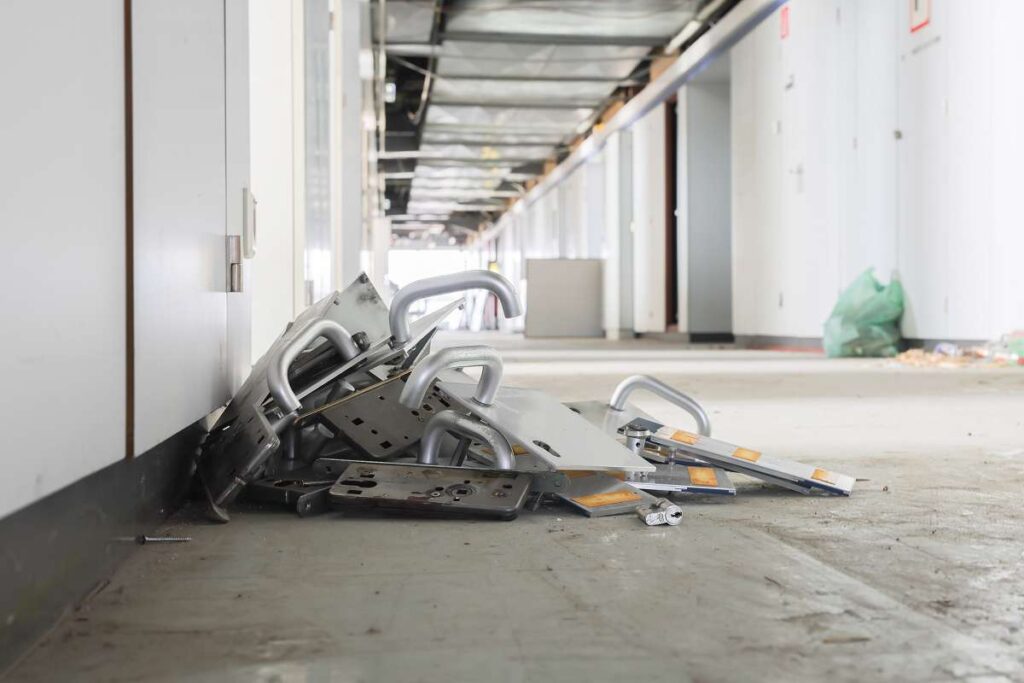
Beautifully described! I don’t think it clashes, as we actually want to place them side by side. Through our public relations work with “Re-Use Stories”, we show what can be created from these materials. We provide a lot to farmers or associations – those aren’t stylish lofts. For me, reuse is relevant on various different levels. It doesn’t always have to be a glossy magazine aesthetic. Some people are then surprised when they come looking for something and realize that we also have “normal” things. Every beam, every partition wall, every technical component, every floor covering, every sink, every fastening screw has its value. We work with them in the best interest of the client.
BauKarussell e. Gen.
Seidengasse 13/3 – 1070 Wien
Kontakt: office@baukarussell.at
Bildquellen:
- Markus Meissner © Schrattenecker-Fischer
- Thomas Romm © Kurt Patzak
- Jasmin Bermadinger © Joanna Pianka
- Sonja Zumpfe © Lina Binder