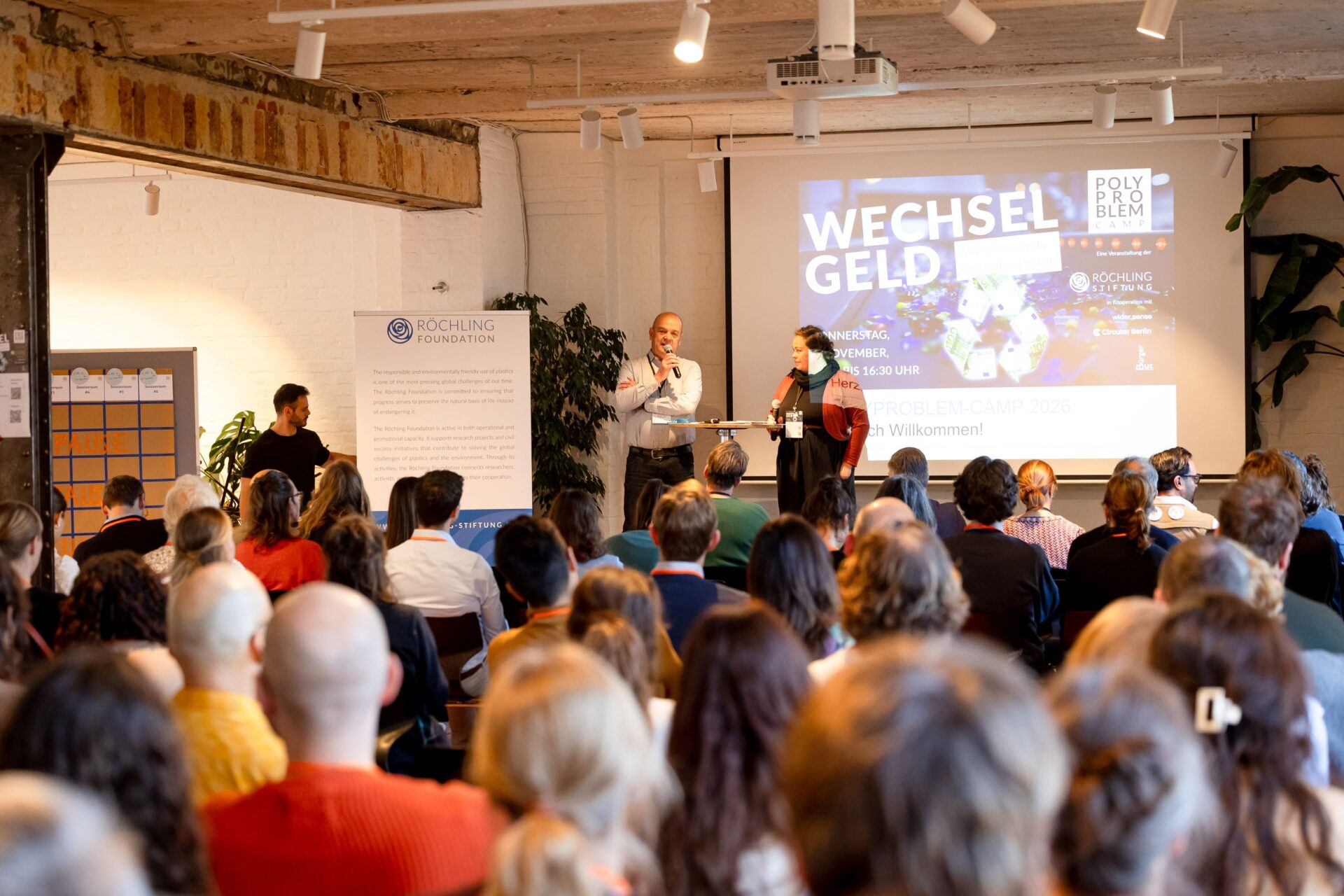
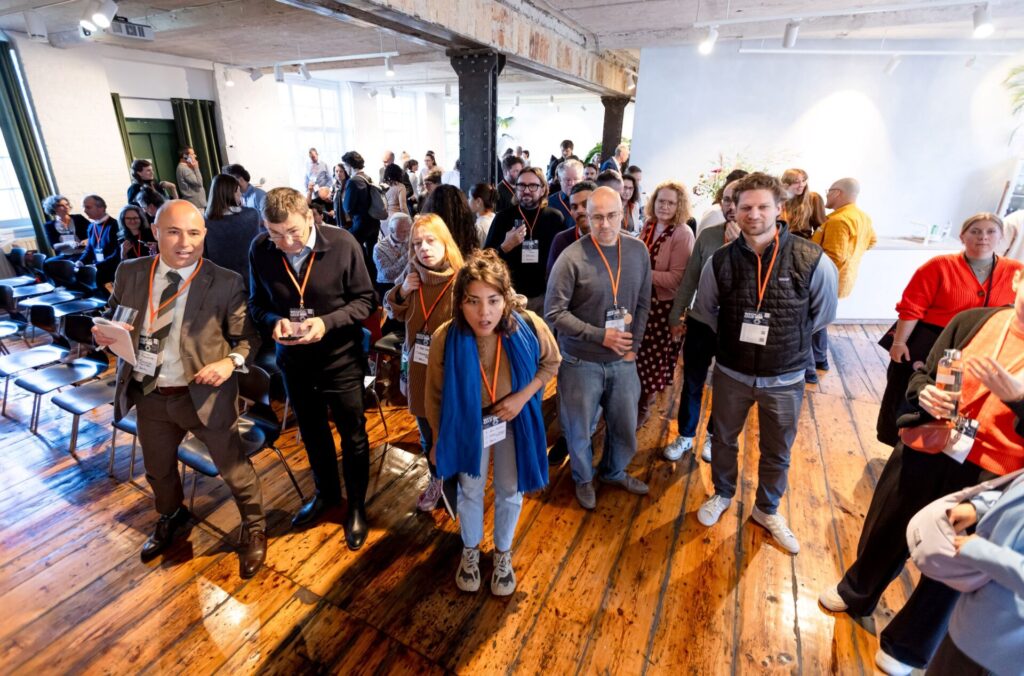
On the 5th of November, around 100 participants from initiatives, businesses, foundations, politics, and research came together at Mitosis Lab in Berlin-Neukölln to tackle a question that often gets sidelined in practice: Who actually finances the circular transition, and how does money reach where it is truly needed? At the invitation of the Röchling Stiftung on the occasion of their latest POLYPROBLEM report, and in cooperation with Stiftung Bürgermut, Wider Sense, and Circular Berlin, a day of intensive conversations unfolded.
What made this BarCamp so special was the atmosphere in the room. From the very first moment, the experience was remarkably immersive because all participants entered the dialogue with genuine openness. Nobody hid behind polished facades. Instead, people shared honestly where things get stuck, where funding gaps emerge, and how we can build new bridges together.
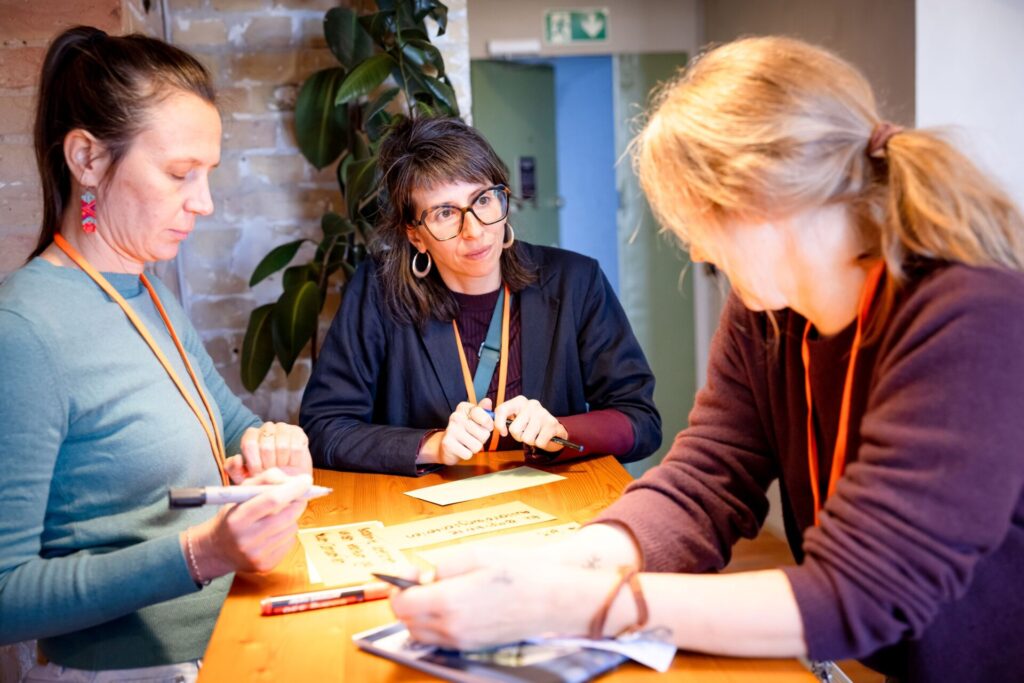
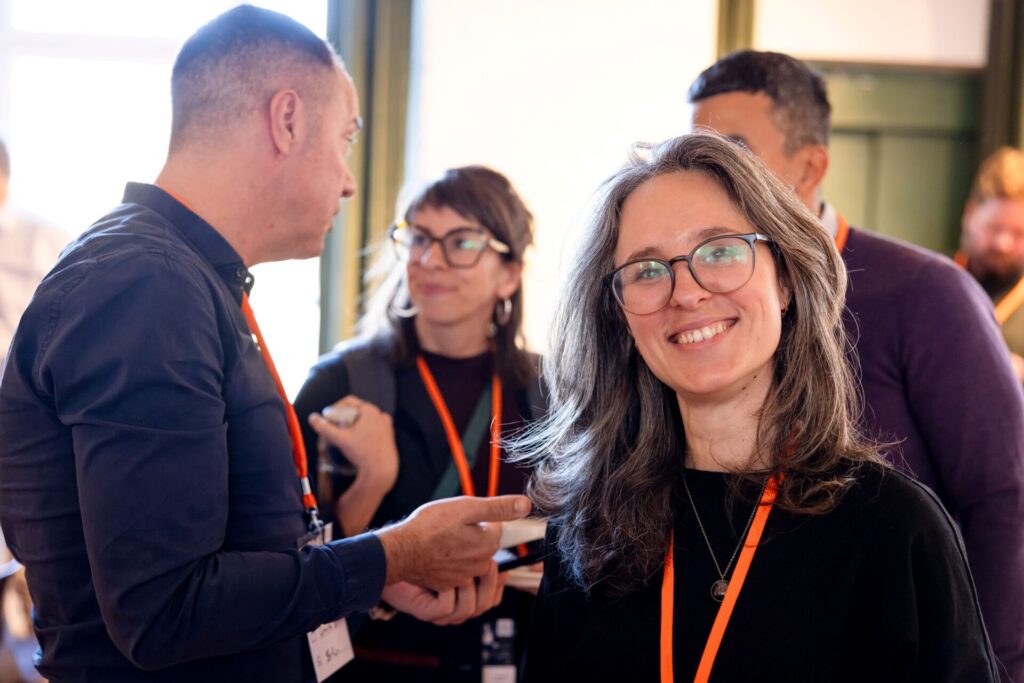
Across 18 sessions over three rounds, the full spectrum of challenges around money were brought. While one session explored the future and financing of unsubsidized washing facilities for reusable packaging systems in the face of high staffing and fixed costs, independent industry advisor Jürgen Dornheim highlighted in his impulse how businesses can already leverage existing laws and regulations to make circularity more financially attractive through smart cost advantages. Khalil Radi and Sarah Vaclavik from Buy Food with Plastic opened up about their eight-year journey of transitioning from donation-funded work toward their first impact investing round, sharing candidly what it takes to combine social and ecological impact with a profitable business model. In another room, Kai Schwehm from WWF Deutschland examined how companies can calculate the true business case for repair, resale, and rental models by factoring in overlooked economic advantages like stronger customer loyalty and reduced supply chain risks.
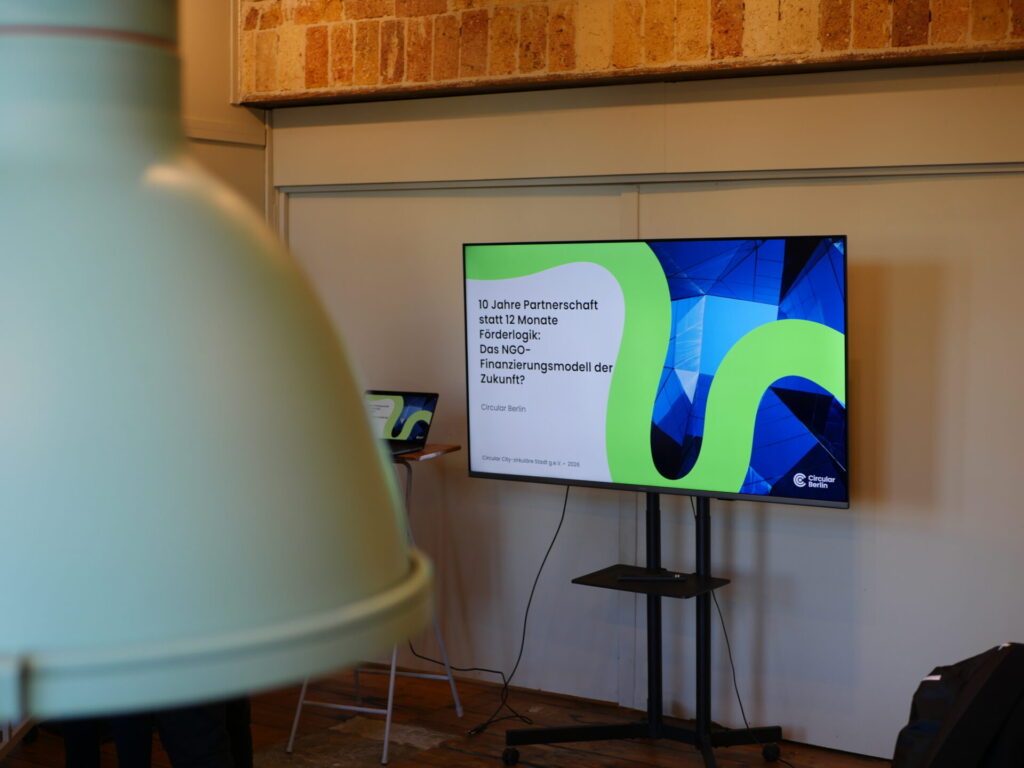
For us at Circular Berlin, our own session titled “10 Years of Partnership Instead of 12 Months of Grant Logic: The NGO Funding Model of the Future?” was a true open-book experiment. We laid our own transformation journey on the table without sugarcoating it. Since 2019, we have implemented over 20 projects across sectors such as construction, textiles,gastronomy, and electronics, and built a network of over 220 local actors. Yet running ten parallel projects with a 99 percent dependency on short-term public funding brought us to a point where we realized that real systemic change cannot be steered sustainably this way.
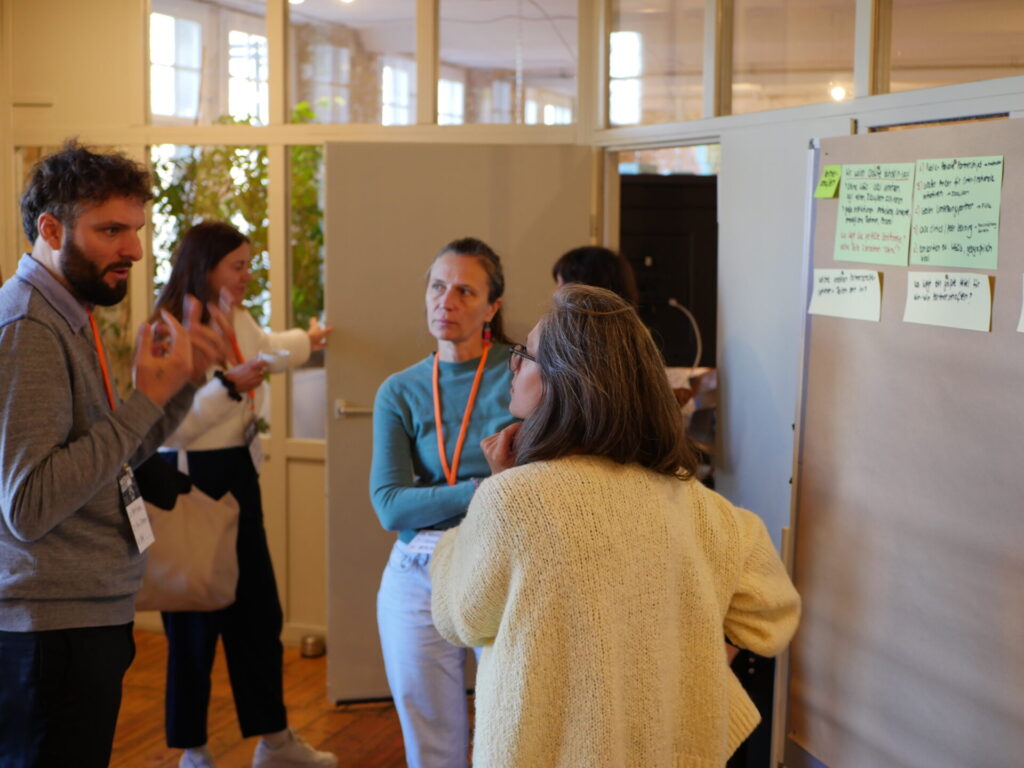
It was precisely this openness that built bridges to other organizations in the room. It was deeply encouraging to see how many other organizations find themselves at very similar crossroads. Some are right in the middle of that exact same transformation process toward systemic impact, yet still cannot see a clear light at the end of the tunnel. Others have already taken that step and still struggle day by day with chronic underfunding.
In our own 2026 to 2036 strategy, we are exploring one possible path forward by moving away from isolated projects toward three long-term impact areas: Circular Culture, Circular Governance, and Circular Market, including initiatives like our Circular Value Program. Yet what stayed with us most from the day’s conclusion was not a single blueprint, but the realization that what matters most right now is making sure we are all asking the right questions:
- How do locally anchored organizations pace this structural shift without losing their footing in the daily work that keeps an ecosystem alive?
- And how can small, agile actors and larger institutions truly succeed on equal footing?
We did not walk away from this day with ready-made patent recipes, but with a strong sense that we are not alone with these big questions about the future. A heartfelt thank you to the Röchling Stiftung, Stiftung Bürgermut, and Wider Sense for this valuable cooperation, and to all participants who brought this day to life through their courage to be open.