Autor: Daniela Raffo
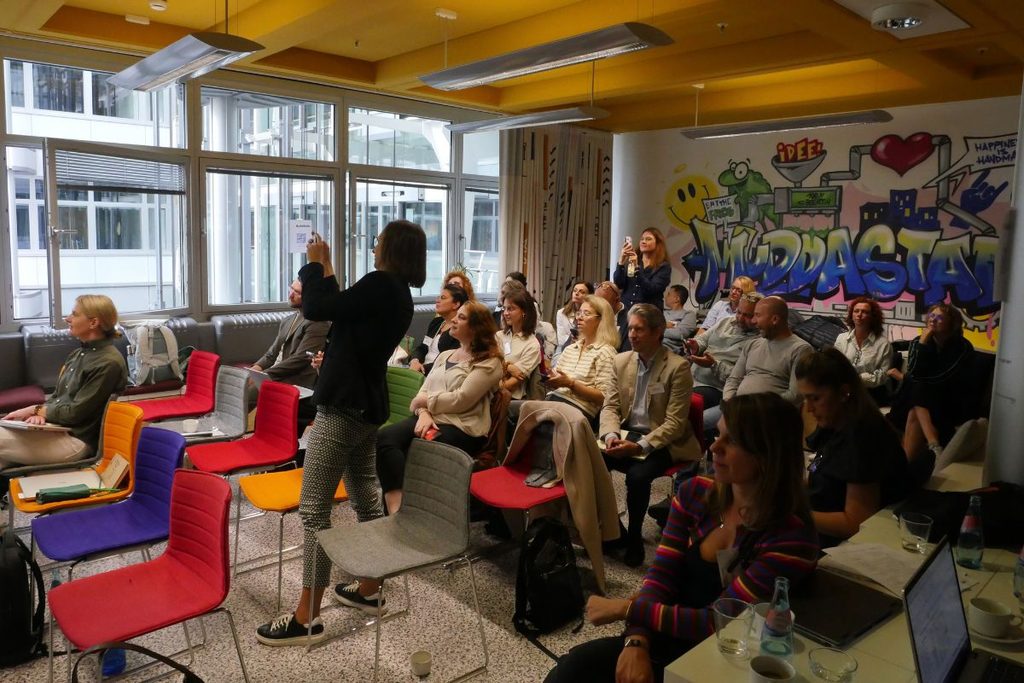
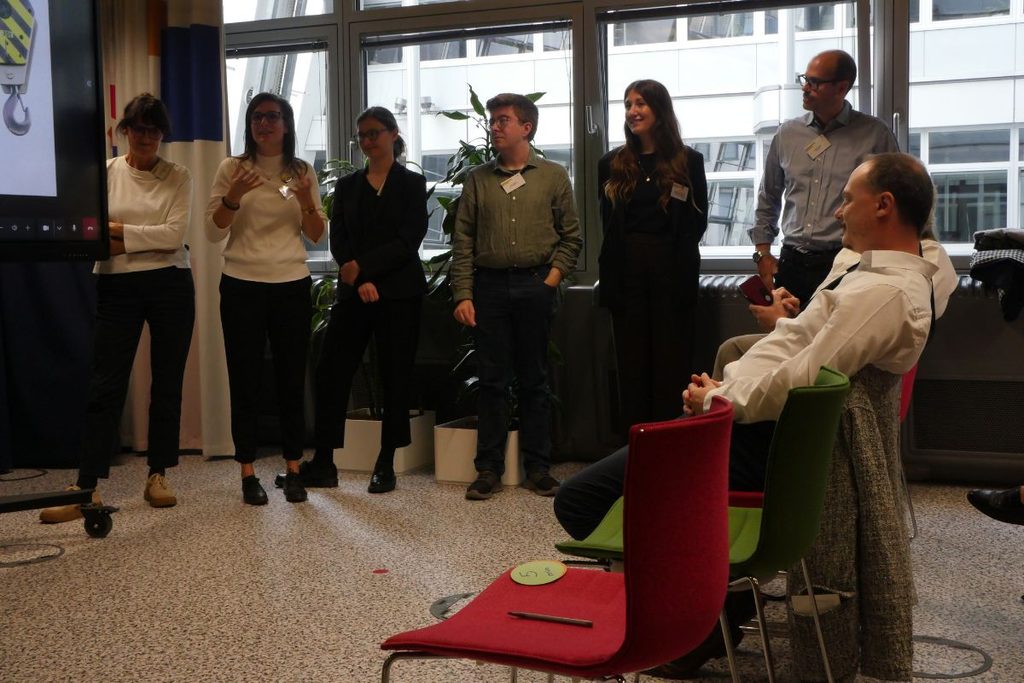
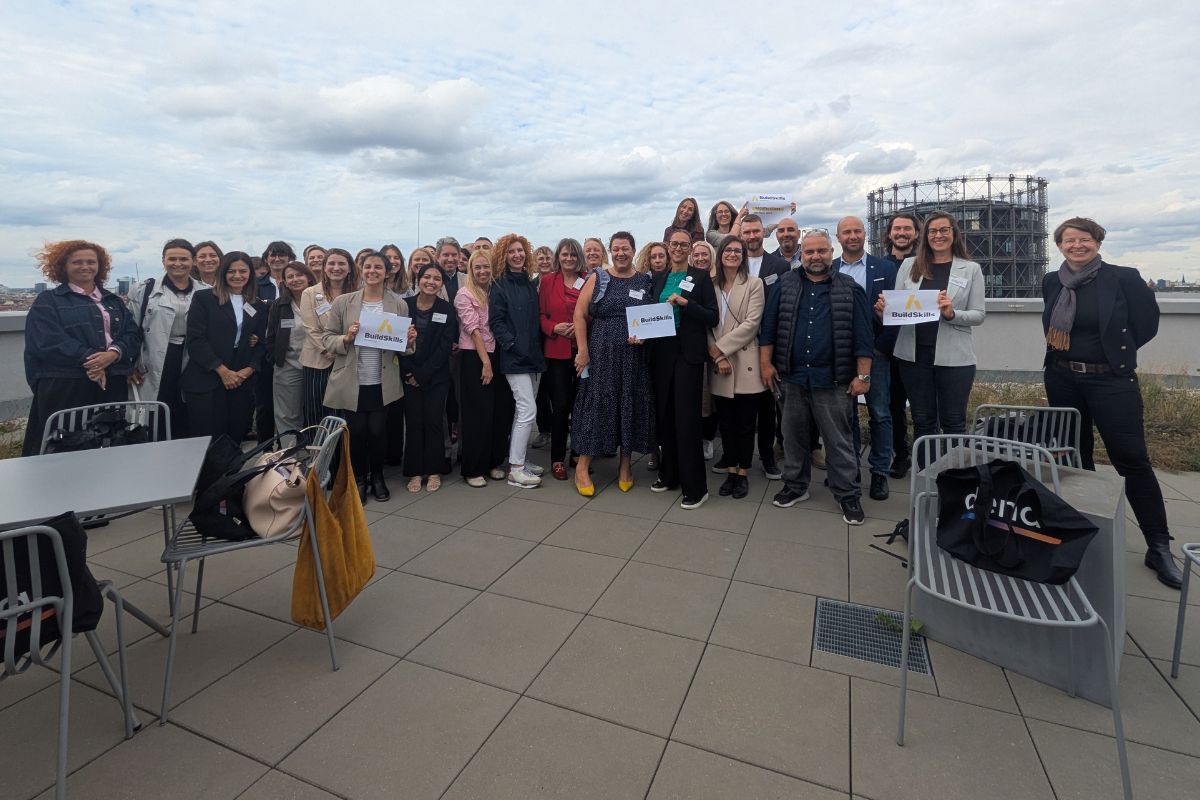
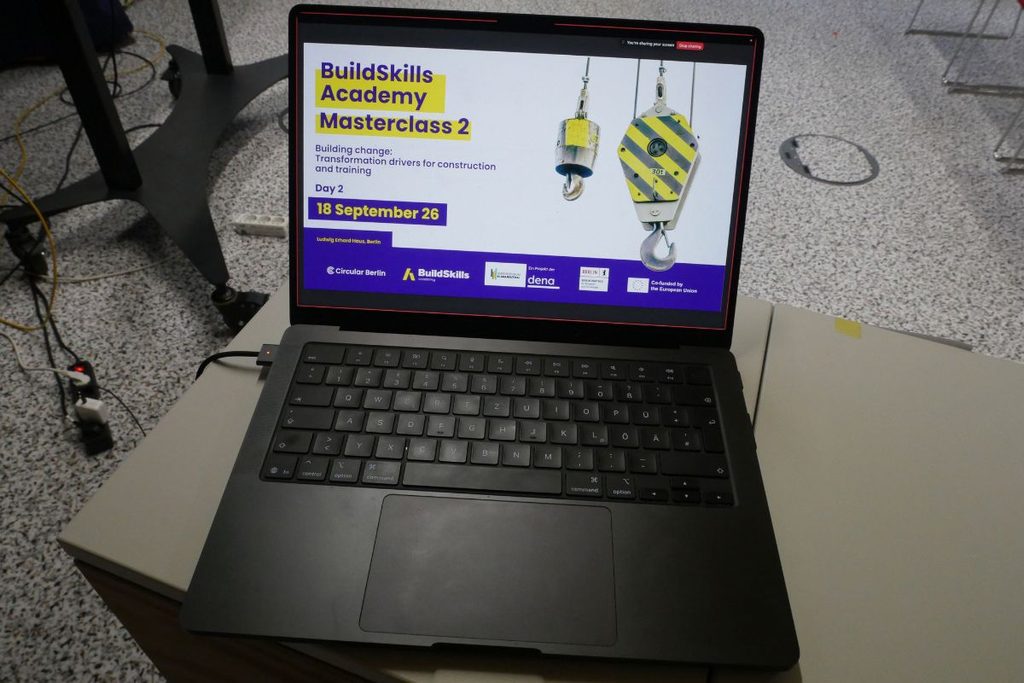
Last week (17-18.09.2026), Circular Berlin co-hosted the second BuildSkills Academy Masterclass alongside the German Energy Agency (dena) and Berlin Partner for Business and Technology. Over two days, we brought together construction industry experts, educators, and policymakers to address a central question: how do we connect fast-moving circular innovations in construction with the way we actually train the workforce on the ground?
Setting the stage
To answer this question, we needed to understand where the sector stands regarding policy, regulation, and technical solutions. The outcome was an encouraging starting point. European frameworks like the recast Energy Performance of Buildings Directive (EPBD) and mandatory Whole Life Carbon (WLC) reporting are pushing sustainability to the top of the agenda. At the same time, practical technical solutions are already proven on the ground:
- Petra van der Wielen (dena) highlighted how bio-based construction materials are moving into mainstream application to cut embodied carbon.
- Julius Schäufele (Concular) demonstrated how Digital Material Passports turn existing buildings into urban mines by tracking material quality and enabling re-entry into supply chains.
- Prof. Dr. Patrick Teuffel showcased findings from the EU Horizon project ReCreate, proving that structural precast concrete elements can be safely deconstructed and reused in new buildings at scale.
The challenge, however, is scaling them up: turning sustainable and circular construction from a collection of inspiring exceptions into the industry norm and standard educational curricula.
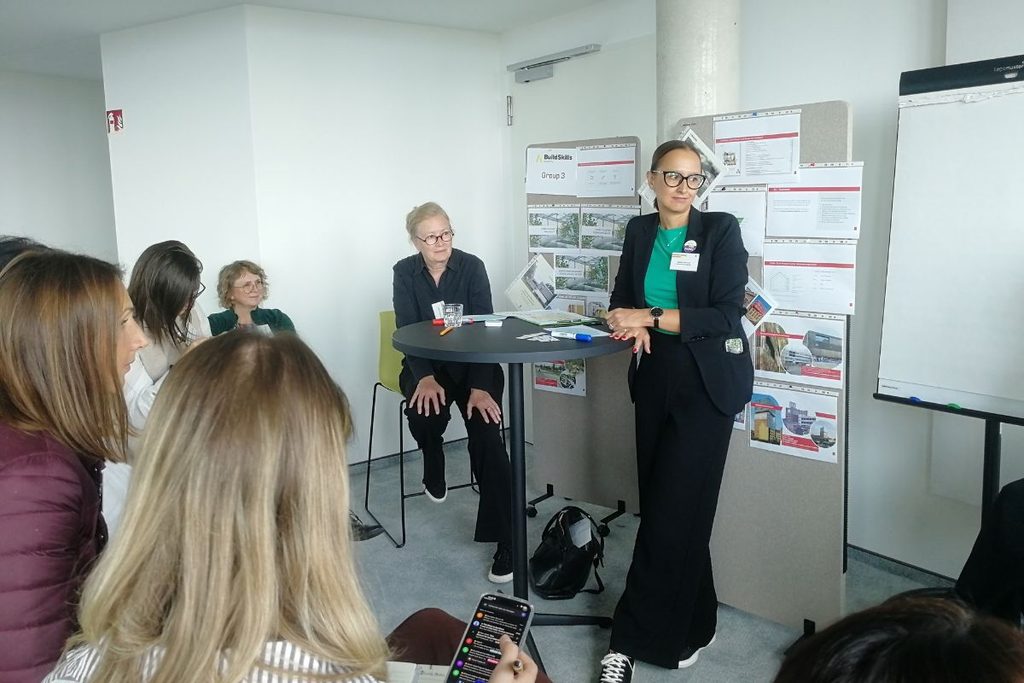
During our panel discussion, we saw the potential of the BuildSkills Academy project’s core idea: a triangle of research, education, and industry, each pushing the others forward. To match the policy-driven momentum, speakers emphasized that we must dare to experiment through hands-on, field-based learning, and not be scared to bring design-driven topics into engineering spaces. Initiatives like Centres of Vocational Excellence (CoVECs) emerged as key institutional drivers to test and scale these experimental learning models across Europe.
Emerging skills from the industry
When we started this work in 2023, our initial goal was to map the green, digital, and sustainable skills required for the twin transition over the next two decades. Barely three years later, both fields have already evolved. The first lesson we learned is that no closed list of skills survives contact with a moving industry; continuous feedback between trade practice, technology providers, and educational institutions is essential. Key insights from our sessions include:
- Technical skills cannot follow a simple copy-and-paste template across EU member states, as materials and technologies differ depending on geography, climate, and economic priorities.
- Data management and analysis are central to circular construction, but the sector is still too slow to grasp their full potential and integrate them into professional profiles.
- Artificial intelligence is becoming part of daily work in construction, particularly for material mapping, structural assessment, and project logistics.
- Cross-disciplinary communication, project management, and collaborative problem-solving are just as critical as physical trade mechanics.
- Reuse, repair, refurbishment, and recycling require workers to develop new competencies in material assessment, selective deconstruction, sorting, storage, and logistics.
- Retrofitting requires skills that combine traditional construction knowledge with energy efficiency, carbon impact analysis, and circular design.
- Circular business models require technical expertise alongside managerial, organizational, and business skills to operate effectively.
Innovation in the classroom
Overcoming long-standing habits (“this is how we have always built”) requires empowering both educators and students with modern learning methods. As highlighted throughout Day 2, the toolkit for educational re-engineering is already rich:
- Field-based execution: Dr. Antonia Christou (Cyprus University of Technology) demonstrated the practical impact of student build-and-disassembly projects under real site conditions.
- Gamified decision-making: Vitus Mayr (PECO-Institut) showed how interactive simulation tools like “Build it Circular!” bring circular material choices directly into trade school classrooms.
- Empowering traditional crafts: Dr. Constanze Küsel (Koblenz Chamber of Skilled Crafts) highlighted upskilling programs in earthen and natural material construction, adapting traditional craftsmanship to modern low-carbon demands.
- Cross-sector collaboration’s platforms: Luzius Rüedi (NOVISIO) presented open-innovation models connecting trade professionals, industry leaders, and start-ups.
One common suggestion to speed up educational approaches with the innovations of the industry is to deliver short, targeted training modules to continuously update workforce skills.
Empowering educators means giving them the resources to stay up to date, both economically and structurally. Public programs must incentivize and sustain innovation in the classroom over the long term, allowing teachers to iterate on a course without risking their funding by being told in subsequent funding calls that they are repeating existing material. Building capacity in the educational workforce takes time and resources; it cannot be an afterthought to the curriculum itself. Achieving this requires changing regulations, curricula, and qualifications. Yet adaptability remains a challenge across EU countries, as introducing new topics alongside rigid administrative requirements demands significant effort from everyone involved.
EU exchange and collaboration
While initiatives like the BuildSkills Academy and Centres of Vocational Excellence cannot instantly harmonize Europe’s diverse building codes or vocational systems, they establish essential mechanisms for long-term progress:
- Projects should strengthen and connect the networks they create, rather than building temporary structures that disappear once funding ends.
- Digital tools make skills frameworks, learning opportunities, training resources, and competence profiles widely accessible across countries and institutions.
- Micro-credentials, digital learning records, clearer competence descriptions, and stronger links between national qualifications and European frameworks make practical skills easier to recognize across borders.
- Involving policymakers early ensures that successful educational pilots directly inform how skills development, validation, and recognition are regulated.
Ultimately, European cooperation is about creating the conditions for people and organizations from different contexts to learn from one another, understand varied ways of working, and collaborate effectively. Transferability requires shared frameworks combined with open communication, mutual understanding, and collaborative practice.
What we learned as Circular Berlin
Taking part in this project pushed Circular Berlin out of our comfort zone. It is not based solely in Berlin, and we did not pilot a course or test the contents ourselves. It deals with topics broader than the circular economy, including occupational health and formal certification frameworks. We are used to being hands-on experts with deep local involvement; this project challenged us while opening new learning opportunities.
Throughout the project, and especially while designing and organizing this Masterclass, we felt the need to bring our core focus to the table and discuss why the circular economy is a central lever in the green and digital transition. These insights emerged organically from the discussion groups without needing to be imposed.
When professionals are given time and space to discuss these critical topics freely, new ideas emerge, and individual concerns are recognized as shared challenges. Participants left inspired, motivated, and empowered to drive change. Finding common ground through active listening and shared effort remains the foundation for long-term transformation.